

For a commercial layer operation, the difference between a profitable year and a struggling one often comes down to a single metric: the egg breakage rate. Industry statistics suggest that a 1% reduction in breakage can save a large-scale farm tens of thousands of dollars annually.
While nutrition and hen health are vital, many farm managers overlook the most common cause of shell damage: mechanical impact during automated transport. If your egg collection system is causing hairline cracks or catastrophic shell failure, the culprit is often the conveyor belt.
At ANNILTE, we have spent 17 years engineering high-precision poultry egg belts. Here is our technical deep dive into how you can optimize your machinery to drive your breakage rate toward zero.
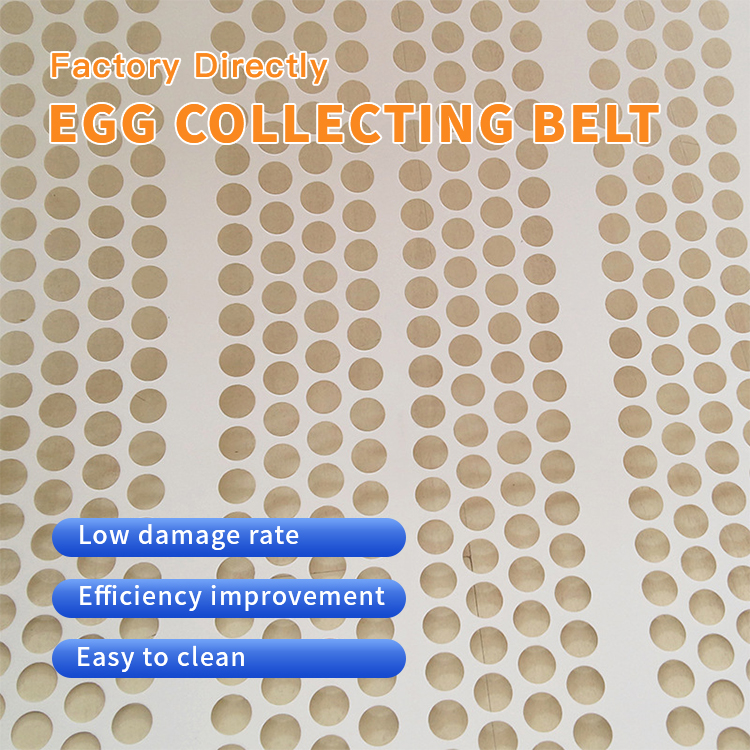
1. Identify the "Impact Points"
Eggs are most vulnerable at the transition points—from the nesting box to the belt, and from one conveyor to another. High breakage rates here are usually caused by:
- Improper Tensioning: A belt that is too loose will sag, causing eggs to collide.
- Surface Hardness: If the belt material is too hard, especially in winter, it fails to absorb the kinetic energy of a rolling egg.
The ANNILTE Solution: We stabilize our belt's elastic modulus within the 800-1000 MPa "High-Toughness Window." This ensures the belt remains supple and impact-resistant across all temperatures. It acts as a gentle "landing pad," absorbing the force of the egg and preventing the impact-induced cracks that plague low-quality systems.
2. Eliminate the "Narrowing" Effect Through Zero-Stretch Tech
One of the hidden causes of egg breakage is belt narrowing. As standard PP belts stretch over time, they become narrower. This creates a gap between the belt and the cage frame.
- The Danger: Eggs can get trapped in these gaps, resulting in immediate crushing as the belt continues to pull.
The ANNILTE Solution: We implement Special Drum Vulcanization to create Co-polymer Molecular Chains. With a tensile strength of ≥10N/mm² at 1% strain, our belts maintain near-zero permanent elongation. By ensuring the belt maintains its exact width for years, we eliminate the dangerous gaps where eggs are most frequently lost.
3. Precision Perforation: Cradling the Shell
For farms using hole-type (perforated) egg belts, the consistency of the holes is the key to stability. If holes are misaligned or irregularly sized (a common issue with manual punching), the eggs will wobble and vibrate during transport.
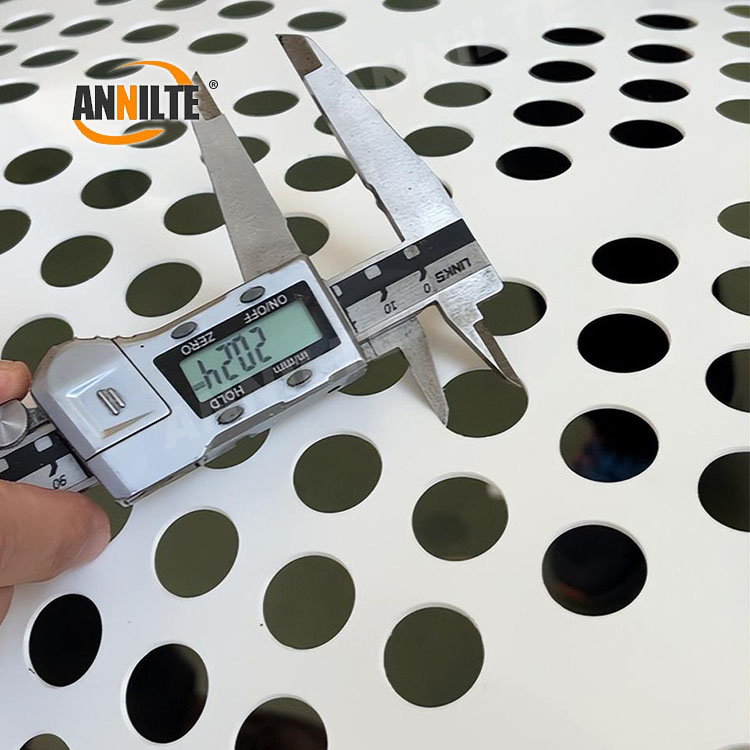
The ANNILTE Solution: Every ANNILTE perforated belt is manufactured on CNC Precision Drilling Lines with a tolerance of ±0.1mm. This micron-level accuracy ensures every egg is perfectly cradled. Stable positioning during long-distance transport is essential to preventing the "clinking" vibration that leads to hairline shell fractures.
4. Solving Tracking Deviations (Running Off-Center)
A belt that runs off-center (tracking deviation) rubs against the cage structure, creating frayed edges and plastic dust. This friction causes the belt to "jerk," sending a shockwave through the line of eggs and causing them to collide.
The ANNILTE Solution: Through HST (Heat Setting Technology) Secondary Setting, we eliminate internal stresses within the material. This ensures perfectly uniform density and "Zero-Tracking" reliability. A belt that runs true and smooth requires fewer manual adjustments and provides a vibration-free journey for your product.
5. Joint Integrity: Avoiding the "Knife-Edge" Bump
The joint (splice) is often where eggs jump or clatter. If the joint is thicker than the rest of the belt or has a protruding lip, it creates a vertical bump every time it passes over a roller.
The ANNILTE Solution: We source materials from Fortune 500 suppliers to ensure absolute Melt Index (MI) stability. Our seamless joining process creates a flush surface with less than 5% fatigue variation after 10,000 cycles. A flush joint means no bumps, no jumps, and no cracks at the connection point.
6. Hygiene and Bio-Security: The Anti-Bacterial Guard
Bacteria and mold can soften the belt surface or create sticky residues that cause eggs to adhere to the belt, leading to breakage during the transfer to the packing station.
The ANNILTE Solution: We use 100% Virgin Food-Grade PP treated with specialized anti-bacterial and anti-fungal agents. This non-absorbent surface prevents the buildup of organic waste, ensuring a clean, friction-consistent path that satisfies global food safety standards.
Summary Checklist to Reduce Breakage:
- Switch to Co-Polymer Belts: Prevent stretching and dangerous gaps.
- Verify Perforation Accuracy: Only use CNC-drilled belts for stable transport.
- Audit Tension Regularly: Ensure the belt modulus is suited for your climate.
- Check Joint Smoothness: Replace belts with protruding or frayed joints.
- Clean rollers daily: Prevent debris from causing tracking issues.

R&D Team
Annilte has a research and development team consisting of 35 technicians. With strong technical research and development capabilities, we have provided conveyor belt customization services for 1780 industry segments, and gained recognition and affirmation from 20,000+ customers. With mature R&D and customization experience, we can meet the customization needs of different scenarios in various industries.

Production Strength
Annilte has 16 fully automated production lines imported from Germany in its integrated workshop, and 2 additional emergency backup production lines. The company ensures that the safety stock of all kinds of raw materials is not less than 400,000 square meters, and once the customer submits an emergency order, we will ship the product within 24 hours to respond to the customer's needs efficiently.
As a leading Chinese conveyor belt manufacturer with 17 years of industry experience, Annilte is proud to hold both ISO quality management certification and the RoHS environmental directive. Our manufacturing facilities meet “Green Factory” standards, and we are also an internationally recognized SGS Gold Supplier.
We offer a comprehensive range of customizable belt solutions under our own brand "ANNILTE", designed to meet diverse industrial needs.
Should you require further information about our products or capabilities, please do not hesitate to contact us.
WhatsApp: +86 185 6019 6101 Tel/WeChat: +86 185 6010 2292
E-mail: 391886440@qq.com Website: https://www.annilte.net/
Post time: Jul-23-2026