

The Critical Role of Manure Belts in Modern Farming
In modern poultry and livestock production, efficient waste management is directly tied to operational efficiency, animal welfare, and environmental compliance. For farm owners, equipment integrators, and procurement managers evaluating automated waste removal solutions, one question frequently arises: What exactly is a manure belt, and why does it matter?
A manure belt, also known as a manure conveyor belt, poultry manure belt, or PP manure belt, is a specialized conveyor system installed beneath livestock cages—particularly in layer houses and broiler breeder facilities—to continuously remove animal waste from the housing environment . This waste management component replaces traditional deep-pit systems, offering superior hygiene, reduced ammonia emissions, and improved working conditions .
For B2B buyers, understanding manure belt technology is essential for making informed procurement decisions that impact long-term operational costs and regulatory compliance.
Technical Definition: What is a Manure Belt?
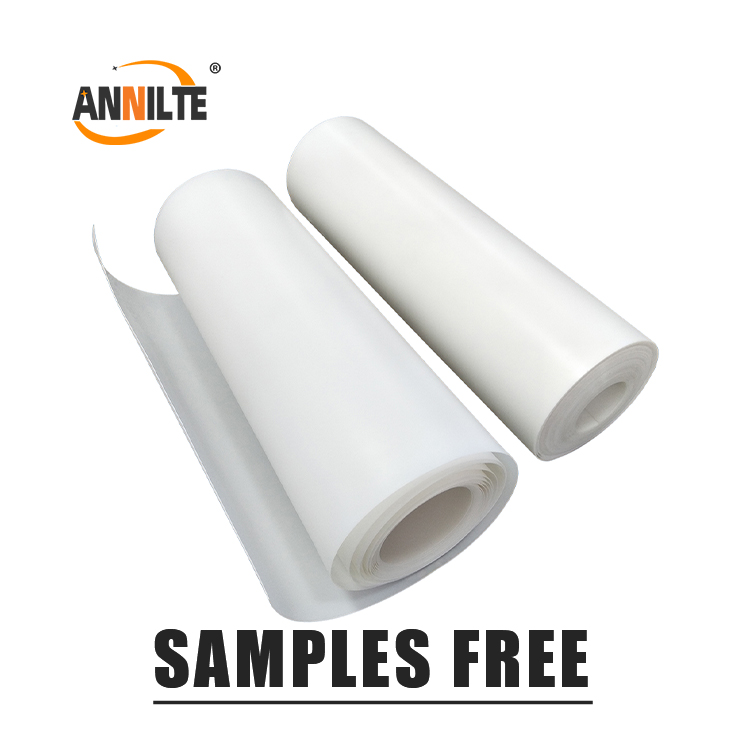
A manure belt is a continuous loop of durable material—typically polypropylene (PP) or polyethylene (PE)—that runs beneath cages to collect and transport manure out of the housing facility . The belt operates on a driven roller system, moving waste to collection points for storage, processing, or disposal.
Key Technical Specifications
| Parameter | Typical Range | Importance |
|---|---|---|
| Material | PP (polypropylene) or HDPE | Determines chemical resistance and durability |
| Width | 0.4m – 3.0m | Must match cage system configuration |
| Thickness | 0.7mm – 2.5mm | Affects tensile strength and lifespan |
| Tensile Strength | ≥12 MPa (PP) | Critical for load-bearing capacity |
| Temperature Range | -30°C to 70°C | Operational versatility across climates |
Understanding these specifications enables buyers to match belt performance to farm conditions—essential for optimizing total cost of ownership.
How Manure Belt Systems Work
1. Collection Mechanism
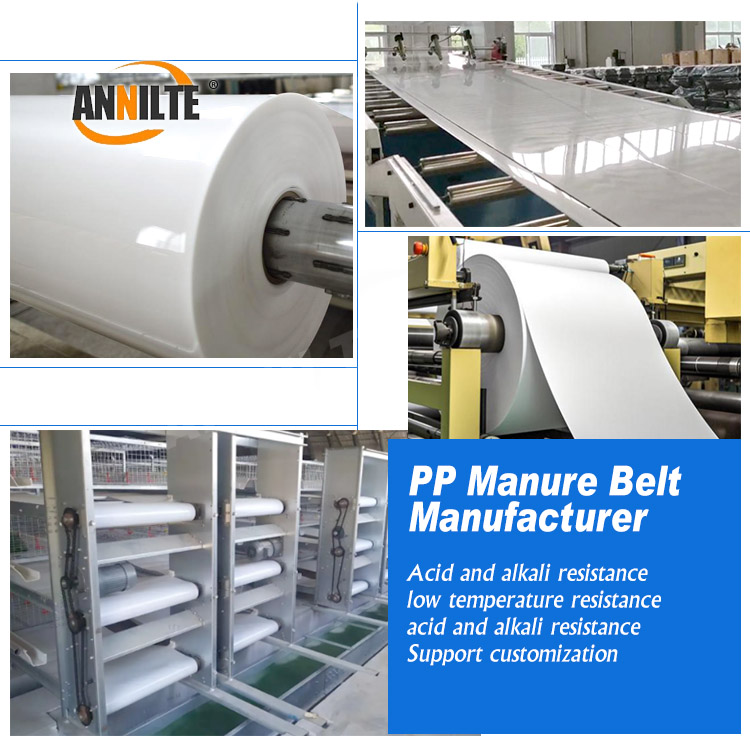
Manure belts are installed directly beneath slatted floors or battery cage rows. Waste drops onto the belt surface where it is temporarily retained. In drying belt systems, exhaust fans or air ducts accelerate moisture reduction before removal .
2. Conveyance & Removal
The belt operates on a programmed schedule—typically every 2–4 days—to convey waste to a collection hopper or cross-conveyor . Automated controls allow farm managers to adjust removal frequency based on bird density, feed formulation, and seasonal conditions .
3. Liquid-Solid Separation
Advanced systems like the convex belt design separate liquid and solid fractions immediately. Liquids drain into side gutters while solids remain on the belt for removal . This separation reduces odor, preserves nitrogen value, and lowers treatment costs .
Why Manure Belts Matter: Environmental & Operational Benefits
1. Reduced Ammonia Emissions
Manure belts dramatically reduce ammonia volatilization compared to deep-pit systems. Studies show forced-air drying belt systems reduce ammonia and greenhouse gas emissions by up to 21% .
2. Improved Bird Health
Removing waste from the house environment reduces pathogen load and fly populations, contributing to better flock performance and lower mortality rates .
3. Lower Waste Management Costs
By separating solids and liquids, manure belt systems reduce wastewater volume and treatment costs. Solids contain concentrated phosphorus, making them valuable for off-farm fertilizer applications .
4. Regulatory Compliance
With increasing environmental regulations on ammonia emissions and nutrient management, manure belt systems help farms meet compliance requirements while reducing reliance on land application .
Manure Belt Maintenance: Maximizing Service Life
Recommended Maintenance Schedule
- Daily: Visual inspection of belt tracking and alignment
- Monthly: Check gearbox fluid levels, belt tension, and drive components
- Quarterly: Deep cleaning of belt surface to prevent debris accumulation
- Annually: Comprehensive system audit and wear assessment
Cleaning Frequency Guidelines
- Daily: For high-density operations or smaller farms
- Every 2–3 Days: Standard for commercial layer houses
- After Each Flock: Sanitize the entire system as part of biosecurity procedures
How to Choose the Right Manure Belt for Your Operation
1. Assess System Configuration
- Cage type: Battery cages vs. cage-free systems
- Housing dimensions: Belt width must match cage rows
- Removal schedule: Drying systems vs. immediate removal
2. Evaluate Material Grade
- Food-grade PP recommended for facilities processing manure into organic fertilizer
- UV-resistant coating for systems exposed to sunlight
- Anti-deviation guides for long belt runs
3. Verify Certifications & Compliance
- ISO 9001 (Quality Management)
- CE Marking (European Conformity)
- SGS Testing (Dimensional accuracy and material composition)
4. Calculate Total Cost of Ownership
Consider price per square meter alongside expected lifespan. A belt priced at $1.50/m² lasting 3 years is more cost-effective than $1.20/m² lasting 1 year .

R&D Team
Annilte has a research and development team consisting of 35 technicians. With strong technical research and development capabilities, we have provided conveyor belt customization services for 1780 industry segments, and gained recognition and affirmation from 20,000+ customers. With mature R&D and customization experience, we can meet the customization needs of different scenarios in various industries.

Production Strength
Annilte has 16 fully automated production lines imported from Germany in its integrated workshop, and 2 additional emergency backup production lines. The company ensures that the safety stock of all kinds of raw materials is not less than 400,000 square meters, and once the customer submits an emergency order, we will ship the product within 24 hours to respond to the customer's needs efficiently.
As a leading Chinese conveyor belt manufacturer with 17 years of industry experience, Annilte is proud to hold both ISO quality management certification and the RoHS environmental directive. Our manufacturing facilities meet “Green Factory” standards, and we are also an internationally recognized SGS Gold Supplier.
We offer a comprehensive range of customizable belt solutions under our own brand "ANNILTE", designed to meet diverse industrial needs.
Should you require further information about our products or capabilities, please do not hesitate to contact us.
WhatsApp: +86 185 6019 6101 Tel/WeChat: +86 185 6010 2292
E-mail: 391886440@qq.com Website: https://www.annilte.net/
Post time: Jul-11-2026