

If you operate a layer or broiler chicken farm in Southeast Asia, you already know the daily struggle: ammonia buildup, wet manure sticking to belts, and frequent belt replacements that eat into your profits. The right poultry manure removal belt changes everything.
Annilte has manufactured conveyor belts for poultry operations for 17 years. We understand exactly what Southeast Asian farms face—high humidity, intense heat, and the need for equipment that simply keeps running. This guide covers what matters most when selecting your next manure removal belt.
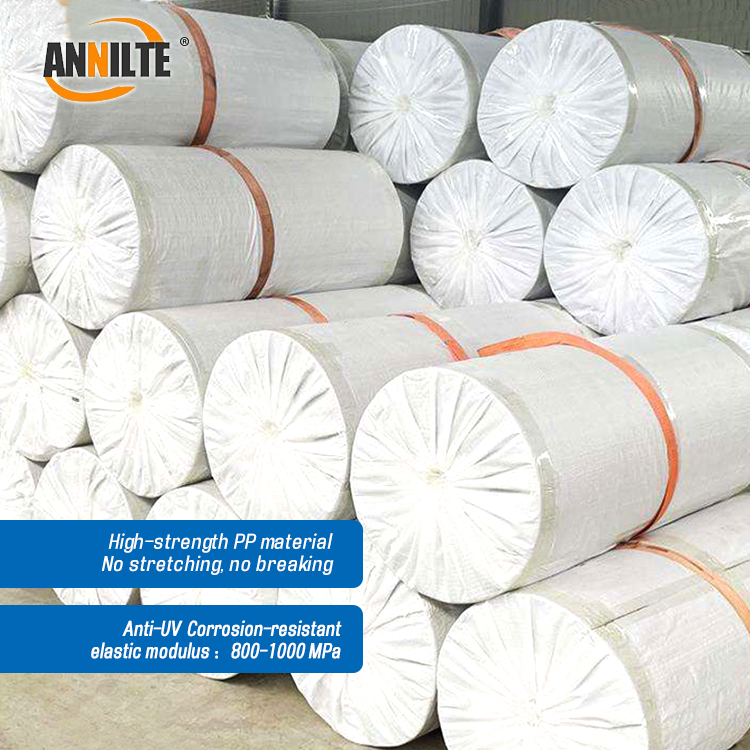
Why PP Material Is Your Best Choice
Polypropylene (PP) manure belts have become the industry standard for modern chicken farms, and for good reason. High-quality PP offers excellent chemical resistance against the acids in poultry manure, meaning your belt won't degrade from constant exposure .
But not all PP belts are equal. Many suppliers cut costs by using recycled material or fillers. The results? Belts that turn brittle within months, crack at the edges, and stretch until they derail.
Annilte uses 100% virgin PP from Sinopec, with verified performance: 6% higher tear strength and 9% improved elastic modulus compared to standard materials. That translates to belts that hold their shape and keep tracking straight, season after season.
Built for Southeast Asia’s Climate
Southeast Asia’s combination of high heat and humidity creates specific challenges. Manure becomes wetter and stickier. Mold and bacteria thrive. Belts that work fine in drier climates can fail prematurely here.
Annilte engineers belts specifically for these conditions:
Anti-mold and antibacterial treatment — inhibits Salmonella and other pathogen growth, keeping your poultry house cleaner and reducing disease risk .
UV stabilization — for farms where belts may be exposed to sunlight, preventing the chalking and cracking that destroys unprotected belts .
Precision thickness control — our belts maintain thickness tolerance within ±0.05mm, ensuring uniform density that prevents mistracking and extends belt life .
For Southeast Asian farms, we typically recommend 1.0mm to 1.2mm thickness, with 1.0mm being the cost-effective standard for most layer operations .
Choosing the Right Thickness
This is one of the most common questions we receive from farm managers. The answer depends on your specific setup:
| Thickness | Best For | Notes |
|---|---|---|
| 1.0mm | Standard layer/broiler cages under 100m rows | The industry standard; 90% of farms use this |
| 1.2mm | Extra-long rows (>100m) or breeder operations | 20% more material for higher tensile strength |
| 1.5mm+ | Very heavy loads or older retrofit systems | Less flexible, used in specialized applications |
If you run a breeder operation, the manure is typically wetter and heavier. In that case, upgrading to 1.2mm is not an expense—it's insurance against premature belt failure .
The Mistracking Problem—Solved
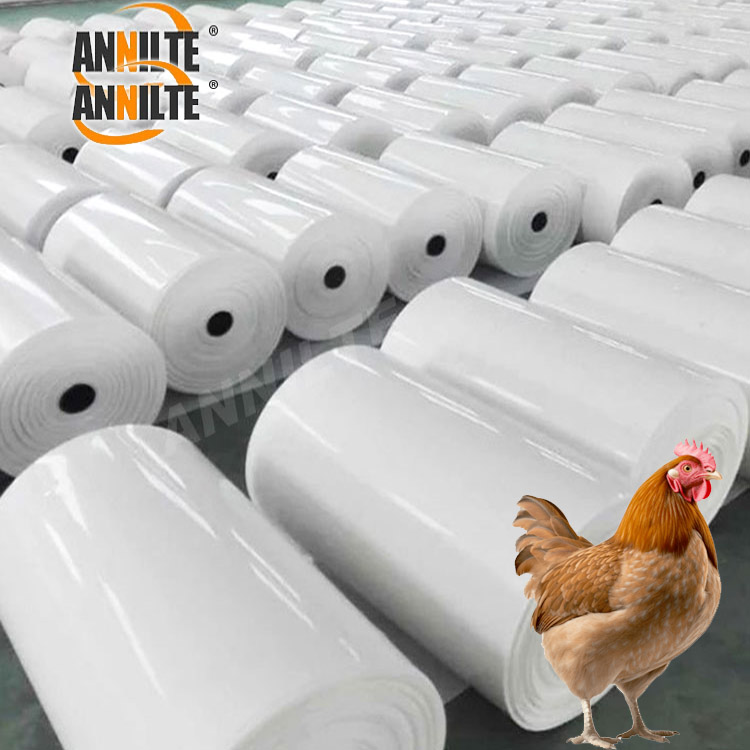
Ask any poultry farmer what frustrates them most about manure belts, and you'll hear the same answer: belts that won't stay centered. Frequent adjustments, edge wear, and eventually complete derailment.
The root cause is internal stress in the belt. Low-quality manufacturers skip the stress-relief processes, and the belt “remembers” the tension from manufacturing. It warps and wanders.
Annilte addresses this with a secondary constant-temperature stretch-setting process that completely releases internal stress. Combined with anti-deviation card strips and roller devices on both sides, our belts track straight from day one with minimal adjustment needed .
What Our Southeast Asia Customers Say
Farms in the Philippines, Vietnam, and Thailand choose Annilte for practical reasons:
“Our previous belts stretched within 6 months. The Annilte belt has been running for over two years with no deformation.” — Layer farm manager, Vietnam
“The anti-stick surface makes a real difference. Less manure carrying back on the return side, cleaner house.” — Broiler operation, Philippines
Customization for Your Specific Setup
No two chicken houses are identical. Annilte offers full customization to match your existing cage system:
- Width: up to 2.3 meters, custom-cut to your exact specifications
- Length: in rolls or pre-spliced to your required dimensions
- Thickness: 0.8mm to 2.0mm available
- Special features: perforation, guide strips, reinforced edges
We also manufacture finger-type stepped overlap joints with ≥95% of the belt body's tensile strength. If you prefer on-site splicing, we provide detailed guidance for ultrasonic welding .

R&D Team
Annilte has a research and development team consisting of 35 technicians. With strong technical research and development capabilities, we have provided conveyor belt customization services for 1780 industry segments, and gained recognition and affirmation from 20,000+ customers. With mature R&D and customization experience, we can meet the customization needs of different scenarios in various industries.

Production Strength
Annilte has 16 fully automated production lines imported from Germany in its integrated workshop, and 2 additional emergency backup production lines. The company ensures that the safety stock of all kinds of raw materials is not less than 400,000 square meters, and once the customer submits an emergency order, we will ship the product within 24 hours to respond to the customer's needs efficiently.
As a leading Chinese conveyor belt manufacturer with 17 years of industry experience, Annilte is proud to hold both ISO quality management certification and the RoHS environmental directive. Our manufacturing facilities meet “Green Factory” standards, and we are also an internationally recognized SGS Gold Supplier.
We offer a comprehensive range of customizable belt solutions under our own brand "ANNILTE", designed to meet diverse industrial needs.
Should you require further information about our products or capabilities, please do not hesitate to contact us.
WhatsApp: +86 185 6019 6101 Tel/WeChat: +86 185 6010 2292
E-mail: 391886440@qq.com Website: https://www.annilte.net/
Post time: Sep-18-2026