

Walk into any gold recovery forum and you will find the same argument playing out. One camp swears by premium cast-urethane vortex mats. Another insists that traditional miners moss is the only proven solution. And somewhere in the middle, a quieter group keeps running synthetic grass carpet—catching gold, making money, and wondering why everyone else is spending five times more per square meter.
Here is the uncomfortable truth that neither the premium mat manufacturers nor the old-school moss loyalists want to admit: mining grass carpet, when specified correctly, remains one of the most effective and economically rational choices for fine gold recovery in sluice and trommel discharge applications. Not because it is fancy. Because it works.
What “Mining Grass Carpet” Actually Means in the Trade
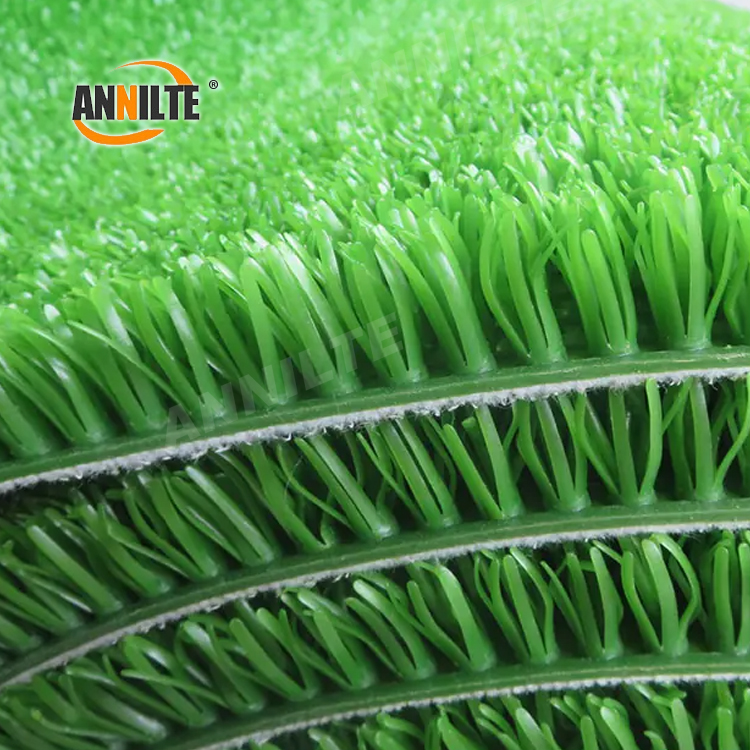
The term covers a family of products that share one defining feature: a dense, fibrous surface that creates micro-eddies as water flows over it. In the field, buyers and operators use several interchangeable names—gold grass mat, mining carpet, gold washing carpet, or simply “the grass”. The confusion is compounded by regional naming habits and by suppliers who rebrand commodity products with proprietary-sounding labels.
What matters for procurement is not the name. It is the construction: a PE (polyethylene) fiber surface bonded to a PA (polyamide) or latex backing. This combination delivers the two properties that determine performance—fiber density and backing integrity. A carpet with sparse, loosely bonded fibers will lose gold and shed fibers into the sluice. A dense, heat-pressed carpet with uniform fiber spacing (≤2mm is the benchmark for serious suppliers) creates a consistent trapping structure that holds fine particles across the entire mat surface.
The Economics Nobody Talks About
Premium vortex mats retail at prices that make small and medium operators wince. One industrial-grade cast urethane tile weighs around 14kg and sells for upwards of $500 AUD in the Australian market. For a single tile. A 1m × 15m roll of PE mining grass carpet—enough to line multiple sluice boxes or replace a full plant’s matting—costs a fraction of that.
This price gap matters because mats are consumables in most operations. Abrasive sands, gravel, and continuous water flow degrade every mat surface over time. The question is not whether the mat will wear out, but how much gold it recovers before it does. An operator running 10-hour shifts in Ghana or Tanzania cannot afford to treat mat replacement as a capital expenditure decision. They need a product that delivers consistent recovery, is easy to swap out, and does not require a financing plan to replace.
A well-specified 24–28mm PE grass carpet delivers 12–18 months of service under typical alluvial conditions. At that lifespan and price point, the cost per gram of recovered gold is often lower than with premium alternatives—provided the carpet is matched to the right application.
Where Grass Carpet Excels (and Where It Fails)
Honest product guidance requires acknowledging limitations. Mining grass carpet is not a universal solution.
Where it performs well:
The fiber structure of grass carpet creates genuine micro-eddy zones that trap fine gold effectively, particularly in the 60–100 mesh range. This is the material that most artisanal and small-scale operations are actually processing. The carpet also handles variable flow conditions better than rigid structured mats—when water velocity fluctuates (as it does in most field installations), the flexible fibers continue to disrupt flow and create trapping zones. And critically for distributors and plant operators, grass carpet can be cut to any dimension with basic tools, making it adaptable to non-standard sluice widths and trommel discharge chutes.
Where it struggles:
Grass carpet is not the best choice for high-volume dredge operations processing large amounts of coarse material with heavy black sand loads. The fiber structure can clog with compacted clay or heavy concentrates, reducing efficiency until cleaned. Cleanout also takes longer than with smooth-surfaced vortex mats—gold trapped in fibers requires more careful rinsing to release fully. Some operators in dredging applications report that grass carpet alone does not provide sufficient retention under high-flow, high-abrasion conditions without a riffle or expanded metal overlay.
The practical conclusion: grass carpet is an excellent primary recovery surface for sluice boxes, trommel discharge, and shaking table feed preparation. For dredges or high-throughput primary recovery, it works best as part of a layered system—grass carpet beneath expanded metal or riffles, not as a standalone surface.
What Separates a Good Grass Carpet from a Bad One
The commodity nature of the product means quality varies enormously. Several specification points separate a carpet that will perform for a season from one that will fail within weeks.
| Specification | Minimum Acceptable | Annilte Standard | Why It Matters |
|---|---|---|---|
| Fiber spacing | ≤3mm | ≤2mm | Tighter spacing = more trapping points per m² |
| Thickness | 20mm | 24–28mm | Thicker fiber = longer service life under abrasion |
| Backing | Non-woven or loose | Heat-pressed PA/PE | Prevents fiber shedding and gold loss through backing |
| UV stabilization | Unspecified | Yes | Critical for African and tropical operations |
| Roll dimensions | Variable | 1m × 15m standard | Reduces waste; cut-to-fit flexibility |
A 20mm carpet with loose backing at $15/m² is not cheaper than a 28mm heat-pressed carpet at $22/m² if the former loses 10% of its fibers in the first month and requires replacement mid-season. The procurement calculation must include downtime, labor for replacement, and—most importantly—the gold that passes through a degraded mat before anyone notices.
Sourcing Considerations for Distributors and Plant Buyers
For B2B buyers, the product is only half the purchase. Supply reliability determines whether you can serve your own customers or keep your plant running.
Annilte has manufactured industrial belting and mining recovery surfaces for 16 years, operating 16 production lines with raw material inventory exceeding 400,000 square meters. This stock position supports emergency dispatch within 24 hours—a practical necessity when a customer’s sluice box is idle and losing production. The company holds ISO certification and SGS Gold Supplier status, and its R&D team of 35 technicians can customize roll width, fiber height, backing type, and color to meet regional preferences or specific equipment dimensions.
For distributors evaluating a private-label or branded grass carpet line, the questions to ask are straightforward: Can the supplier provide fiber density data? Is the backing heat-bonded or glued? What is the UV stabilization method? And can they ship replacement stock before the current roll is exhausted? A supplier who cannot answer these questions is selling commodity turf, not a recovery tool.

R&D Team
Annilte has a research and development team consisting of 35 technicians. With strong technical research and development capabilities, we have provided conveyor belt customization services for 1780 industry segments, and gained recognition and affirmation from 20,000+ customers. With mature R&D and customization experience, we can meet the customization needs of different scenarios in various industries.

Production Strength
Annilte has 16 fully automated production lines imported from Germany in its integrated workshop, and 2 additional emergency backup production lines. The company ensures that the safety stock of all kinds of raw materials is not less than 400,000 square meters, and once the customer submits an emergency order, we will ship the product within 24 hours to respond to the customer's needs efficiently.
As a leading Chinese conveyor belt manufacturer with 17 years of industry experience, Annilte is proud to hold both ISO quality management certification and the RoHS environmental directive. Our manufacturing facilities meet “Green Factory” standards, and we are also an internationally recognized SGS Gold Supplier.
We offer a comprehensive range of customizable belt solutions under our own brand "ANNILTE", designed to meet diverse industrial needs.
Should you require further information about our products or capabilities, please do not hesitate to contact us.
WhatsApp: +86 185 6019 6101 Tel/WeChat: +86 185 6010 2292
E-mail: 391886440@qq.com Website: https://www.annilte.net/
Post time: Oct-31-2026