

The Hidden Cost of Belt Failures in Spinning Operations
In Southeast Asia’s textile industry, spinning mills operate in some of the world‘s most demanding conditions: high humidity, elevated temperatures, and continuous production schedules that leave little room for unexpected stoppages. Yet one component often overlooked in maintenance planning accounts for a disproportionate share of both energy waste and unplanned downtime: the transmission belt.
A 30,000-spindle mill consumes approximately 700 belts per year across all departments . When belts fail prematurely or lose tension, the consequences cascade: spindle speeds drop, yarn quality becomes inconsistent, and machine stoppages ripple through the entire production line. For mill managers across Vietnam, Indonesia, Thailand, and Malaysia, choosing the right transmission belt isn’t just a purchasing decision—it‘s an operational strategy.
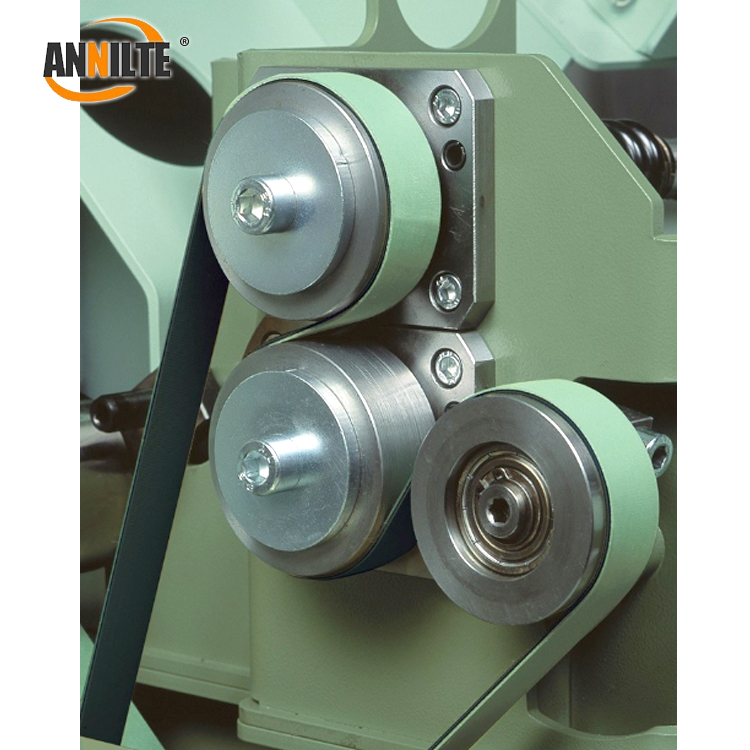
Common Pain Points in Spinning Machine Belt Applications
Drawing from industry troubleshooting data, here are the issues that cost Southeast Asian mills the most:
1. Belt Slippage and Inconsistent Spindle Speed
When a belt slips on the motor drive pulley or spindle wharves, the required revolution is not achieved. This directly affects yarn twist and quality. Common causes include inadequate belt tension, oil contamination on the belt surface, or insufficient contact pressure from the tensioning system .
2. Energy Waste from High Friction
Traditional rubber spindle tapes with poor friction characteristics consume more power than necessary. Studies show that switching to energy-efficient belt designs can reduce electricity consumption by 8% to 12% compared to conventional cotton belts, and 3% to 5% compared to standard rubber-coated belts .
3. Frequent Belt Replacement and Maintenance Stoppages
Every belt change means machine stoppage. In a mill with numerous gang-driven multi-spindle drives, these standstills are costly and inefficient . Belts that require frequent re-tensioning or that fail prematurely multiply this burden.
4. Fiber Accumulation and Cleaning Requirements
In humid Southeast Asian conditions, fiber particles tend to accumulate on belt surfaces, increasing spindle load and causing noise. Belts designed to resist fiber adhesion reduce cleaning interventions and keep production uninterrupted .
What Makes a Transmission Belt Suitable for Spinning Machines?
Spinning machines—particularly ring spinning frames and twisting machines—require belts that deliver consistent spindle speed, stable power transmission, and minimal maintenance over long production cycles.
The key performance characteristics to evaluate include:
| Requirement | Why It Matters |
|---|---|
| Dimensional stability | Prevents the need for re-tensioning after installation; maintains consistent spindle rpm |
| High abrasion resistance | Withstands constant contact with spindle whorls and pulleys |
| Low elongation | Ensures stable tension throughout the belt‘s service life |
| Anti-static properties | Critical in humid environments where fiber attraction is a problem |
| Energy efficiency | Directly reduces per-unit production costs |
| Adhesive-free joining | Enables on-site installation without specialized equipment |
The Annilte Solution: Conveyor Belt Engineering for Spinning Applications
At Annilte, our foundation is in conveyor belting—a field where durability, dimensional stability, and resistance to demanding operating conditions are non-negotiable. We bring that engineering discipline to our spinning machine transmission belt range.
Our belts are designed to address the specific challenges of Southeast Asian textile operations:
- Stable tension retention: Reduces the need for frequent re-tensioning, keeping spindle speeds consistent and yarn quality uniform
- Energy-efficient operation: Lower friction losses translate directly to reduced electricity costs
- Fiber-resistant surface: Minimizes accumulation in humid conditions, reducing cleaning downtime
- Durable construction: Long service life lowers total cost of ownership and reduces replacement frequency

R&D Team
Annilte has a research and development team consisting of 35 technicians. With strong technical research and development capabilities, we have provided conveyor belt customization services for 1780 industry segments, and gained recognition and affirmation from 20,000+ customers. With mature R&D and customization experience, we can meet the customization needs of different scenarios in various industries.

Production Strength
Annilte has 16 fully automated production lines imported from Germany in its integrated workshop, and 2 additional emergency backup production lines. The company ensures that the safety stock of all kinds of raw materials is not less than 400,000 square meters, and once the customer submits an emergency order, we will ship the product within 24 hours to respond to the customer's needs efficiently.
As a leading Chinese conveyor belt manufacturer with 17 years of industry experience, Annilte is proud to hold both ISO quality management certification and the RoHS environmental directive. Our manufacturing facilities meet “Green Factory” standards, and we are also an internationally recognized SGS Gold Supplier.
We offer a comprehensive range of customizable belt solutions under our own brand "ANNILTE", designed to meet diverse industrial needs.
Should you require further information about our products or capabilities, please do not hesitate to contact us.
WhatsApp: +86 185 6019 6101 Tel/WeChat: +86 185 6010 2292
E-mail: 391886440@qq.com Website: https://www.annilte.net/
Post time: Sep-23-2026