

What a Sublimation Felt Blanket Actually Does
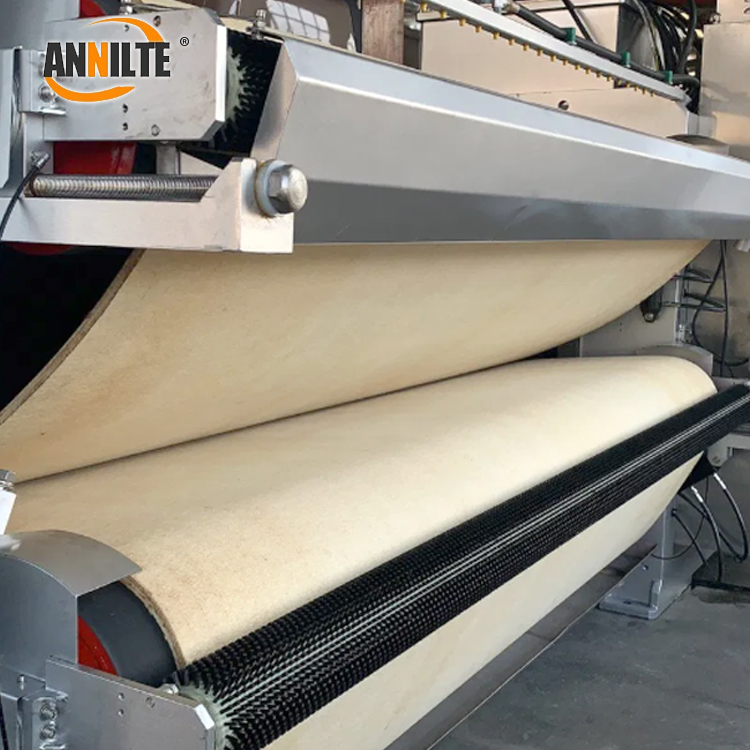
In a rotary sublimation calender, the felt blanket is not a passive accessory. It is the mechanical interface that presses transfer paper and fabric against the heated drum, maintains contact long enough for dye transfer, and releases cleanly at the end of the cycle.
The blanket operates under brutal conditions: continuous rotation, sustained nip pressure, and surface temperatures up to 230–250°C. A research study on endless felt blankets for transfer-printing machines found that blankets under 18-hour daily operation faced repetitive tensile stress, elongation, compression force, abrasion, and high heat—leading to replacement every 3–4 months in some operations.
That replacement cycle is expensive. The same study tested a 100% Nomex sample at 3,400 g/m² with 13 mm puncture depth and found it achieved the best results among tested configurations. The takeaway is clear: density and construction quality directly determine how often you shut down the line to swap blankets.
Specification Checklist for Sublimation Felt Blankets
2.1 Density (g/m²)
Density is the single most predictive specification for service life under pressure.
| Density Range | Typical Application | Trade-off |
|---|---|---|
| 2,200–2,800 g/m² | Lower-pressure lines, textured fabrics | Softer hand, shorter compression life |
| 2,800–3,600 g/m² | Standard rotary sublimation calenders | Best balance of conformability and durability |
| 3,600–4,400 g/m² | High-pressure, high-speed lines | Longer life, less conformability on uneven fabrics |
Market listings show density ranges from 2,600 g/m² for 6 mm thickness up to 3,800 g/m² for 10 mm and 4,500 g/m² for 12 mm. For most rotary sublimation operations, 3,200–3,400 g/m² at 8 mm is a proven working specification.
Action: Ask your supplier which density they recommend for your specific machine model and line speed—not just what they stock.
2.2 Thickness
Most sublimation felt blankets run 6–10 mm, with 8 mm the most common field specification. Thicker blankets (10–12 mm) offer more compression recovery for high-pressure applications but absorb more heat energy during warm-up and may not conform as closely to fabric irregularities.
Action: If replacing an existing blanket, measure the old one under light tension, not flat on a bench. Thickness measured under compression is not the same as the free-state specification.
2.3 Working Temperature
100% Nomex felt performs continuously at 200–250°C, with short-term peaks to 260°C. Be cautious of suppliers who quote 260°C or higher as a continuous rating. Sustained operation near the upper limit accelerates fiber degradation.
Action: Confirm your actual drum surface temperature at the nip, not just the setpoint on the control panel. Temperature stratification across wide drums is common.
2.4 Endless Construction
Sublimation felt blankets must be endless (seamless). A joined belt introduces a thick point that causes tracking drift, pressure marks on fabric, and eventual joint failure. The blanket wraps around the heated drum and tensioning rollers; any discontinuity in thickness or density disrupts the entire process.
Action: Confirm the blanket is truly endless, not a skived splice. Ask for the misalignment tolerance—±3 mm is a common industry specification.
2.5 Width and Perimeter
Annilte manufactures endless sublimation felt blankets in widths from 600 mm to 3,800 mm and custom perimeters to match your drum circumference and tensioning geometry.
Action: Specify the usable fabric width you need to print, not the drum face width. Allow for edge trim and edge densification.
Failure Modes: What to Watch For
A sublimation felt blanket does not fail without warning. These signals tell you it is time to plan a replacement.
Thermal Shrinkage
The blanket tightens on the rollers, tracking drifts, and print registration moves. Industry specifications typically control width shrinkage at 2.5–3%. If you observe the blanket tightening noticeably after several weeks, the fiber or heat-setting process is suspect.
Surface Glazing and Contamination
Sublimation dye residue and thermal byproducts build a glazed layer that reduces heat transfer efficiency and can leave marks on fabric. Some suppliers apply anti-stick surface treatments to extend cleanable life.
Edge Fraying
On wide blankets, edges take the highest mechanical and thermal stress. Poorly needled edges shed fiber, contaminate fabric, and lead to tracking failure. Look for edge densification or reinforced edge sealing in the manufacturing process.
Permanent Compression Set
Visible thin bands or depressions at roller positions mean the felt has lost resilience. It cannot be restored—plan replacement before print quality drops.
Machine Compatibility: What to Confirm Before Ordering
Sublimation felt blankets are machine-specific. The same width and perimeter does not guarantee proper fit if the tensioning system, drum diameter, or nip geometry differs.
Common rotary sublimation calender brands requiring exact-fit blankets include:
- Klieverik (KTC, TX, TK series)
- Monti Antonio (Mod. 2000, 2010, 2040)
- Transmatic
- Practix
- Stork / SPGPrints
- Lemaire
- Bruckner
A supplier with genuine application experience will ask for your machine brand and model, drum diameter, and current blanket dimensions before quoting. If they only ask for width and quantity, they are likely a trader, not a manufacturer.

R&D Team
Annilte has a research and development team consisting of 35 technicians. With strong technical research and development capabilities, we have provided conveyor belt customization services for 1780 industry segments, and gained recognition and affirmation from 20,000+ customers. With mature R&D and customization experience, we can meet the customization needs of different scenarios in various industries.

Production Strength
Annilte has 16 fully automated production lines imported from Germany in its integrated workshop, and 2 additional emergency backup production lines. The company ensures that the safety stock of all kinds of raw materials is not less than 400,000 square meters, and once the customer submits an emergency order, we will ship the product within 24 hours to respond to the customer's needs efficiently.
As a leading Chinese conveyor belt manufacturer with 17 years of industry experience, Annilte is proud to hold both ISO quality management certification and the RoHS environmental directive. Our manufacturing facilities meet “Green Factory” standards, and we are also an internationally recognized SGS Gold Supplier.
We offer a comprehensive range of customizable belt solutions under our own brand "ANNILTE", designed to meet diverse industrial needs.
Should you require further information about our products or capabilities, please do not hesitate to contact us.
WhatsApp: +86 185 6019 6101 Tel/WeChat: +86 185 6010 2292
E-mail: 391886440@qq.com Website: https://www.annilte.net/
Post time: Oct-30-2026