

The Replacement Conversation Your Customers Are Already Having
Every round baler owner eventually faces the same question: repair the belt, or replace it? For distributors, the more important question is whether you have the right answer in stock when that question gets asked.
The search term “round baler belt replacement” carries a specific kind of urgency. It is not a browsing query. It is a break-down-in-the-field, season-is-half-over, I-need-this-today query. The buyers behind it are not comparing features. They are checking availability, compatibility, and whether you can get the part to them before the weather turns.
This guide is about serving that buyer. Not with a generic belt, but with a replacement program built around the failure patterns, wear indicators, and model-specific specifications that define real-world round baler belt replacement.
What Triggers a Replacement Decision (And Why Most Failures Are Predictable)
Distributors who understand why belts fail sell more replacement belts because they can anticipate demand instead of reacting to it.
John Deere’s own wear documentation identifies a three-step tread design with built-in indicators: the top step wears first, then the middle, and once both are gone, the belt should be replaced to avoid fastener damage and bale-starting problems. This is not a subtle signal. It is a physical countdown built into the belt surface.
Beyond tread wear, the most common replacement triggers fall into three categories:
Splice and pin failure. The lacing pin is typically the first component to wear out, and it is also the cheapest to replace. Distributors who stock pins and lacing separately capture the low-cost repair sale before it escalates into a full belt replacement. John Deere manuals explicitly state that pins are wear items to be checked weekly and replaced as needed.
Edge wear and tracking problems. A belt that has been running off-center will show curled or frayed edges. Once that happens, the belt has likely passed the point of reliable repair. This is especially common on mixed fleets where belt lengths have drifted out of specification. Deere specifies that all belts of similar length should be within 38 mm of each other, and long versus short belts should not differ by more than 152 mm.
Surface pattern loss. The diamond or rough-top texture exists to grip crop and start the bale. When the pattern wears smooth, the baler may still run, but bale formation degrades and the operator notices. That is when replacement becomes inevitable, not optional.
The Specification Problem That Costs Distributors Sales
The single biggest source of friction in the replacement belt market is specification mismatch. A belt that is a quarter-inch too wide will rub against the chamber wall. A belt that is slightly too long will slip on the drive rollers. Either scenario results in a return, a lost customer, or both.
For distributors serving mixed fleets, the specification challenge is compounded. A John Deere 5-series and a New Holland Roll-Belt may use belts of similar appearance but different ply ratings, cover patterns, or splice configurations. Ordering by “close enough” does not work in this category.
ANNILTE addresses this by manufacturing to your specification, not to a nearest-stock equivalent. We support:
- Width and length verified to OEM dimensions, including pin-to-pin measurement for laced belts
- Ply configuration matched to application—2-ply for lighter duty, 3-ply for high-intensity silage and heavy windrows
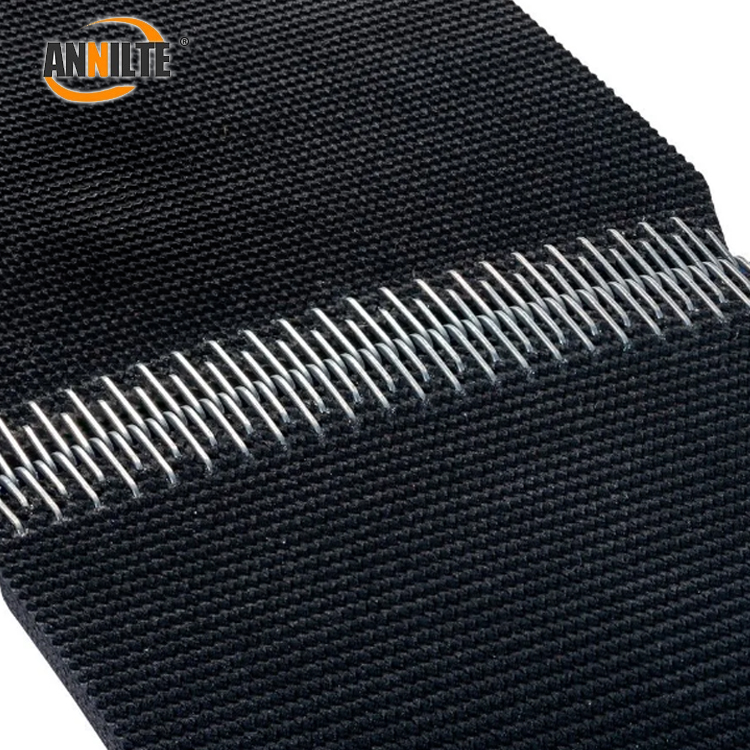
- Splice compatibility with the fastening systems your customers already use, including Clipper, Alligator, and MATO-compatible options
- Surface pattern selection—diamond top for general hay, rough top or chevron for higher-moisture conditions
The result is a replacement belt that installs without modification and performs without excuses.
One Belt or a Full Set? The Advice That Builds Trust
When a customer calls for a single replacement belt, the easy sale is to ship one belt. The better sale—the one that builds a lasting distributor relationship—is to ask the right question: how old are the other belts on that baler?
Belts relax and stretch at different rates depending on their position in the chamber. Center belts often carry more crop load and stretch faster than outer belts. If one belt has failed from wear, the others are likely at a similar stage. Installing one new belt alongside four worn belts creates a length mismatch that accelerates wear on the new belt and can cause tracking problems.
Industry guidance consistently recommends replacing the full set when one belt shows significant wear or failure. Distributors who communicate this clearly—without pressuring the sale—position themselves as technical advisors rather than parts counters. The customer who understands why they need five belts instead of one will come back for the next set.
ANNILTE supports this advisory approach by offering flexible order quantities and mixed-set configurations. Whether your customer needs a single belt for an emergency repair or a complete set for pre-season service, the same production and quality standards apply.
Sourcing Replacement Belts for the Long Season
The replacement belt business is seasonal, but the preparation is not. Distributors who wait until spring to stock replacement inventory are already behind. The most effective programs place orders against forecast, not against current stock levels.
ANNILTE’s production capacity—five manufacturing bases, 18 automated production lines, and raw material inventory exceeding 400,000 square meters—is built to support distributor stocking programs rather than one-off purchases. We can hold specifications on file for repeat orders, maintain consistent fabric and splice quality across batches, and dispatch emergency orders within 24 hours when a customer’s season cannot wait.
For distributors evaluating a replacement belt supplier, the questions worth asking are not about price per belt. They are about what happens in July, when a customer’s baler is down and your stock is thin. A supplier who can answer that question is a supplier worth keeping.

R&D Team
Annilte has a research and development team consisting of 35 technicians. With strong technical research and development capabilities, we have provided conveyor belt customization services for 1780 industry segments, and gained recognition and affirmation from 20,000+ customers. With mature R&D and customization experience, we can meet the customization needs of different scenarios in various industries.

Production Strength
Annilte has 16 fully automated production lines imported from Germany in its integrated workshop, and 2 additional emergency backup production lines. The company ensures that the safety stock of all kinds of raw materials is not less than 400,000 square meters, and once the customer submits an emergency order, we will ship the product within 24 hours to respond to the customer's needs efficiently.
As a leading Chinese conveyor belt manufacturer with 17 years of industry experience, Annilte is proud to hold both ISO quality management certification and the RoHS environmental directive. Our manufacturing facilities meet “Green Factory” standards, and we are also an internationally recognized SGS Gold Supplier.
We offer a comprehensive range of customizable belt solutions under our own brand "ANNILTE", designed to meet diverse industrial needs.
Should you require further information about our products or capabilities, please do not hesitate to contact us.
WhatsApp: +86 185 6019 6101 Tel/WeChat: +86 185 6010 2292
E-mail: 391886440@qq.com Website: https://www.annilte.net/
Post time: Oct-30-2026