
Why Recycling Is the Harshest Home for a Magnetic Separator Belt
Search "recycling magnetic separation conveyor belt" and you'll find plenty of suppliers listing belt widths and rubber grades. What almost none of them address is the operating reality that makes recycling different from every other magnetic separation application: the material stream is deliberately unpredictable.
In mining or cement, the feed is crushed to a defined top size and the ferrous fraction is relatively consistent. In recycling—whether you're processing auto shredder residue (ASR), municipal curbside material, e-waste, or baled light iron—the ferrous fraction is a grab bag. On any given shift, a separator belt may face:
- Shredder fluff with embedded wire and sharp tramp metal
- Crushed aluminum cans with razor-thin edges and residual moisture
- Sheet metal fragments with jagged, work-hardened edges
- Occasional oversized or entangled items that strike the belt at an angle
This variability is why belts that perform acceptably in a quarry fail within months in a recycling plant. The recycling buyer isn't choosing a belt for a known duty; they're choosing a belt that must survive an unknown worst case, every day.
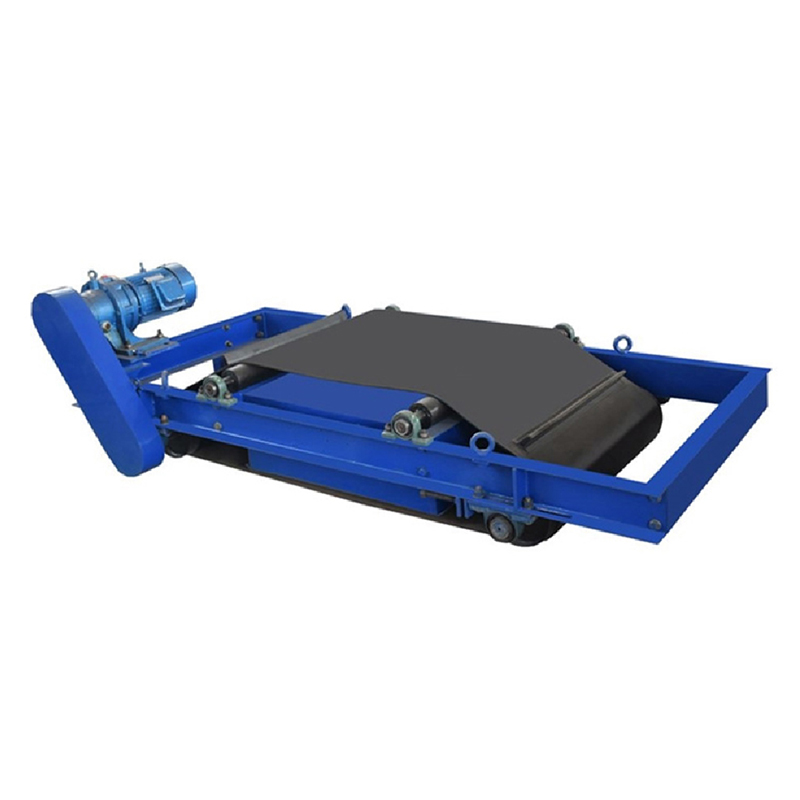
The Four Failure Modes That Dominate Recycling Separator Belts
Based on the failure patterns Annilte sees from recycling customers, belt problems cluster into four categories—and each points to a specific design response.
1. Puncture and cut-through from wire and thin sheet. Shredder wire and can edges concentrate force on a tiny contact area. Standard cover rubber simply parts. The countermeasure is a combination of higher cover hardness with a tear-resistant fabric carcass, and in the most aggressive ASR lines, a stainless steel armored layer that presents a hard, smooth surface to the impact.
2. Cover delamination from moisture and oil. Recycling material is wet and oily far more often than mineral feed. Water migrates through any cover breach and attacks the fabric-to-rubber bond; oil swells the rubber from within. A belt specified with a general-purpose cover can delaminate even without a visible puncture. Oil-resistant and low-water-absorption cover compounds are not optional in this sector.
3. Cleat loss and subsequent belt scuffing. Once a cleat detaches, captured ferrous items no longer travel out of the magnetic zone cleanly—they tumble and scrape along the belt surface. In recycling, where the ferrous is sharp, a missing cleat turns into a rapidly widening wear patch. Integrally vulcanized cleats, rather than bonded or bolted ones, are the only reliable answer.
4. Tracking failure on short, high-tension centers. Recycling separators are often mounted in tight spaces with short pulley centers and high belt tension, which amplifies any splice or width inconsistency. An endless belt with dimensionally locked width and circumference tracks far more predictably than a field-spliced belt—and eliminates the splice as a failure origin.
Matching the Belt to the Recycling Sub-Stream
A single "recycling belt" specification is a fiction. The sub-stream determines the priority:
| Recycling sub-stream | Dominant threat | Belt priority |
|---|---|---|
| Auto shredder residue (ASR) | Wire, sharp tramp, fine fluff | Puncture resistance + armored option |
| Curbside / single-stream MRF | Crushed cans, moisture, glass grit | Oil/water-resistant cover + abrasion resistance |
| Baled light iron / HMS | Heavy jagged plate, impact loading | Thick cover + high-tensile carcass + strong cleats |
| E-waste | Small sharp fragments, mixed plastics | Cut resistance + cleat integrity on short centers |
| Construction & demolition | Rebar ends, concrete grit | Tear resistance + abrasion-resistant cover |
Annilte's customization process starts by asking which sub-stream the separator serves, because that single answer narrows the cover compound, carcass, and cleat design far more than a belt width ever could.
Total Cost Logic: Why the Cheapest Belt Is the Most Expensive
Recycling operations run on tight margins, and maintenance budgets get scrutinized. That pressure often pushes buyers toward the lowest-priced replacement belt. The math rarely works.
Consider a typical MRF or ASR line separator. A belt change means:
- Production stoppage on the ferrous recovery line (and often upstream sorting)
- Labor for removal, installation, and re-tensioning
- Lost ferrous recovery during downtime—material that goes to landfill or lower-value streams
- Administrative cost of expediting a replacement
When a low-cost belt fails in half the service life of a properly specified one, the belt's purchase price is a small fraction of the true cost. The relevant metric is cost per ton of material processed, not price per belt. Annilte's specification approach is built around extending service interval, because in recycling, uptime is the product.

R&D Team
Annilte has a research and development team consisting of 35 technicians. With strong technical research and development capabilities, we have provided conveyor belt customization services for 1780 industry segments, and gained recognition and affirmation from 20,000+ customers. With mature R&D and customization experience, we can meet the customization needs of different scenarios in various industries.

Production Strength
Annilte has 16 fully automated production lines imported from Germany in its integrated workshop, and 2 additional emergency backup production lines. The company ensures that the safety stock of all kinds of raw materials is not less than 400,000 square meters, and once the customer submits an emergency order, we will ship the product within 24 hours to respond to the customer's needs efficiently.
As a leading Chinese conveyor belt manufacturer with 17 years of industry experience, Annilte is proud to hold both ISO quality management certification and the RoHS environmental directive. Our manufacturing facilities meet “Green Factory” standards, and we are also an internationally recognized SGS Gold Supplier.
We offer a comprehensive range of customizable belt solutions under our own brand "ANNILTE", designed to meet diverse industrial needs.
Should you require further information about our products or capabilities, please do not hesitate to contact us.
WhatsApp: +86 185 6019 6101 Tel/WeChat: +86 185 6010 2292
E-mail: 391886440@qq.com Website: https://www.annilte.net/
Post time: Nov-13-2026