

Most PU conveyor belt quotations look almost identical. Same thickness, same width, same "food grade" claim. Then the belt arrives, and three weeks later the buyer is dealing with a splice that catches product, a surface that won't release dough, or a compliance document that never materialized. The difference between a good PU belt and a cheap one rarely shows up on paper—it shows up on the line.
This is written for two groups: distributors adding PU belting to their range, and food factory owners or purchasing staff who need to get the spec right without wading through marketing language.
Where PU Actually Fits
PU has largely taken over from PVC in food conveying for a few practical reasons. The surface is dense and smooth, so it cleans down more easily and resists product residue building up in pores. It holds up better against abrasion and cutting than PVC at the same thickness, which matters on lines running bones, crusts, or anything with a sharp edge. And reputable grades are formulated for direct food contact under FDA and EU rules.
Where it doesn't fit: high-temperature zones above roughly 80°C for most standard grades, and applications needing serious solvent resistance. If a customer is running raw meat through a high-pressure washdown zone, PU is usually the right answer. If they're moving product through a fryer or oven exit, it probably isn't—and saying so upfront saves everyone a return.
The Specs Worth Asking About
Thickness and width are the easy part. These are the points that separate a belt that runs for years from one that causes problems.
The joint. This is where most failures start. PU belts are usually joined with a toothed splice, steel clips, or a vulcanized endless joint. For food plants, a toothed splice finished flush is generally preferred because it leaves fewer places for product to catch and makes cleaning easier. Ask what joint type is standard and whether it's rated for the smallest pulley on the customer's machine. A belt that's fine on a large pulley can crack at the joint on a small one.
Antistatic rating, if it applies. On dry-product lines—bakery transfer, packaging infeed—lightweight items can cling or static can build up. Antistatic PU grades typically target surface resistance around the 10⁷ ohm range, but formulations differ. If a supplier says "antistatic" without giving a number, treat it as an open question rather than a spec.
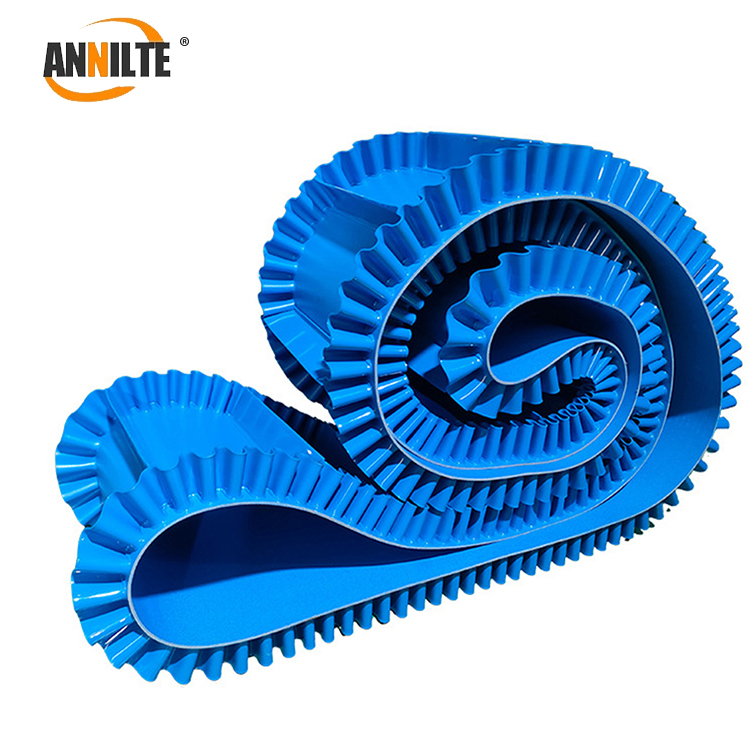
Top-face pattern. Smooth works for general conveying. For inclined lines, wet product, or sticky dough, a patterned top face makes a real difference in grip and release. Having two or three pattern options available covers most customer situations without turning your warehouse into a showroom.
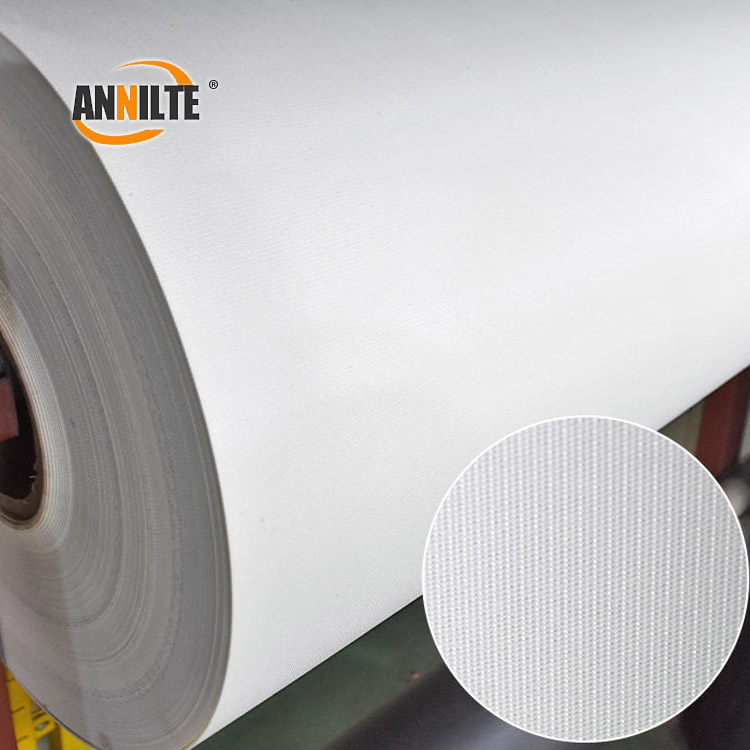
The fabric backing. Total thickness on food-grade PU belts usually runs from about 0.8mm to 4.0mm, with 1.5–3.0mm covering most food processing positions. The polyester carcass underneath determines tensile strength and how well the belt holds its shape over time. One thing buyers often miss: it's not just the top coat that needs to meet food-contact rules. The fabric treatment matters too, and the declaration should cover the whole construction.
For Food Plant Buyers: Get It in Writing
"Food grade" means nothing without a document behind it. Before ordering, ask the supplier to state which grade is being quoted and which certification applies to it. For Europe, that's usually EU 10/2011. For the US, FDA 21 CFR. For wet-product zones where hygienic design matters, EHEDG certification is a useful extra signal.
A supplier who can't answer this clearly is telling you something useful. Test it on a first order rather than after you've committed to a container load.
For Distributors: What to Actually Stock
PU belting is a wide category, and trying to cover all of it ties up money fast. A workable starting range:
- 1.5–2.0mm, smooth top, white or blue — general food conveying, light packaging, bakery transfer
- 2.5–3.0mm, smooth or lightly patterned — meat, poultry, wet-product lines where cleanability is the priority
- 3.0–4.0mm, patterned top — inclined conveying, dough, anything needing grip
On widths, follow the machines that dominate your territory. In Europe and North America, 500mm, 600mm, 800mm and 1000mm cover a lot of food processing positions.

R&D Team
Annilte has a research and development team consisting of 35 technicians. With strong technical research and development capabilities, we have provided conveyor belt customization services for 1780 industry segments, and gained recognition and affirmation from 20,000+ customers. With mature R&D and customization experience, we can meet the customization needs of different scenarios in various industries.

Production Strength
Annilte has 16 fully automated production lines imported from Germany in its integrated workshop, and 2 additional emergency backup production lines. The company ensures that the safety stock of all kinds of raw materials is not less than 400,000 square meters, and once the customer submits an emergency order, we will ship the product within 24 hours to respond to the customer's needs efficiently.
As a leading Chinese conveyor belt manufacturer with 17 years of industry experience, Annilte is proud to hold both ISO quality management certification and the RoHS environmental directive. Our manufacturing facilities meet “Green Factory” standards, and we are also an internationally recognized SGS Gold Supplier.
We offer a comprehensive range of customizable belt solutions under our own brand "ANNILTE", designed to meet diverse industrial needs.
Should you require further information about our products or capabilities, please do not hesitate to contact us.
WhatsApp: +86 185 6019 6101 Tel/WeChat: +86 185 6010 2292
E-mail: 391886440@qq.com Website: https://www.annilte.net/
Post time: Oct-17-2026