

When procurement teams search for poultry farm egg belt, the conversation usually centers on the purchase: material, width, price per meter, delivery time. That is the moment the belt is specified. It is not the moment the belt’s service life is determined.
The service life of a poultry farm egg belt is decided in the first six weeks after installation, and then reaffirmed or eroded every week thereafter. Two farms can install identical belts from the same production batch and see dramatically different outcomes. One belt runs for five years with routine tension checks. The other develops edge fraying within eighteen months, begins mistracking, and is replaced before its third year.
The difference is not the belt. It is the management of the belt after it leaves the pallet.
This guide addresses the operational side of poultry farm egg belt ownership: what to do during installation, how to manage the initial stretching period, which maintenance checks actually predict failure, and when a repair is viable versus when a replacement is overdue. If you are still in the specification phase, our companion guide covers housing-system selection. This article is for the farm engineers and maintenance supervisors who will live with the belt for the next several years.
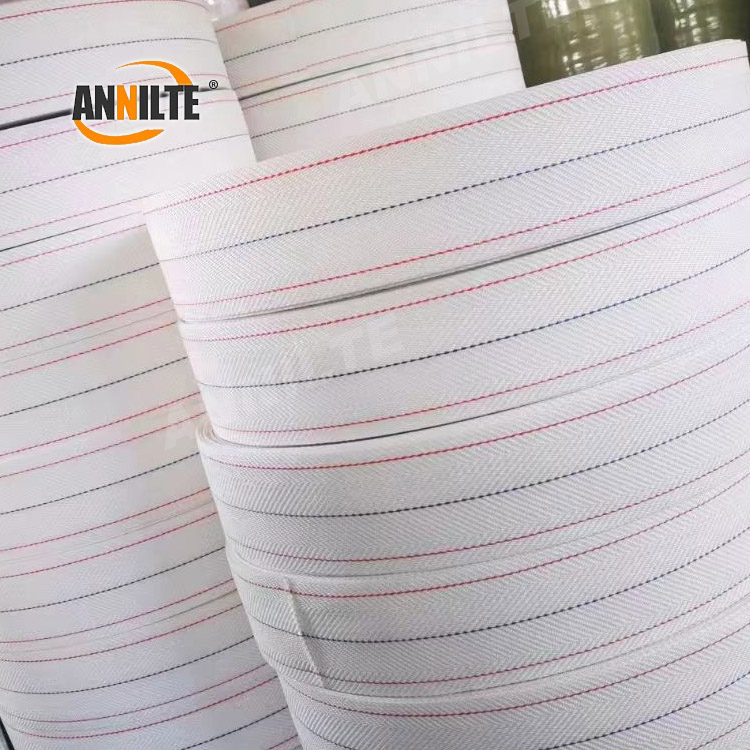
The Initial Stretch Period: The Six Weeks That Decide Everything
A woven polypropylene egg belt does not arrive at its final length. It is manufactured in a relaxed condition, and it must be stretched gradually under load before it stabilizes. This is not a defect. It is a predictable characteristic of the material, and how you manage it determines whether the belt tracks properly for the rest of its life.
Why New Belts Stretch
Woven PP belts are constructed from yarns that have residual crimp and relaxation built into the weave. When tension is first applied, these yarns begin to straighten and align. The belt elongates. If the belt is tensioned aggressively on day one to remove all slack, the yarns are forced into alignment unevenly, and the belt may develop uneven edges or cupping that never fully resolves.
The correct approach is gradual tensioning over several weeks, allowing the natural load of egg collection to do the stretching work.
The Practical Protocol
Weeks 1–2: Run the belt at the lowest tension that keeps it tracking on the pulleys without slipping. Do not attempt to remove visible slack. Accept that the belt will sag slightly.
Weeks 3–6: As the flock comes into peak production, the increasing egg load provides natural stretching force. Check tension at the drive end every few days. Take up slack incrementally—never in a single large adjustment.
Weeks 6–8: The belt should be approaching its stable length. If the tensioner is nearing the end of its adjustment range during this period, that is a warning sign. Either the belt was undersized for the row length, or the elongation specification of the material is too high for the application.
The Overstretching Trap
The most common installation error is over-tensioning a new belt to “get it tight.” A belt that is too tight will cup at the edges, allowing eggs to slide underneath and jam. This jamming creates localized stress that can permanently crease the belt, and a creased belt cannot be recovered. It must be cut and spliced, or replaced.
Run the belt as loose as possible without interfering with the drive system. This single principle prevents more belt failures than any other maintenance practice.
Splice Inspection: The Five-Minute Check That Prevents Downtime
Every poultry farm egg belt has a splice. For long row lengths, it may have more than one. The splice is the single most common failure point in the entire collection system, and it is also the easiest component to monitor.
What to Look For During Daily Collection
The splice should be inspected every time eggs are collected—which means daily during production periods. This is not a weekly maintenance task. It is a visual check that takes less than a minute.
Ragged or frayed edges at the splice. The first sign of splice degradation is fraying at the cut edge of the belt. If the weave is beginning to unravel at the joint, the splice is weakening.
Lapping direction and alignment. The splice should be lapped in the correct order and run straight. A splice that is misaligned will cause the belt to track to one side, and the resulting edge friction will accelerate wear along the entire row.
Lifted or separated layers. If the splice uses a layered construction, check that the layers remain bonded. Any separation at the edges is a failure precursor.
When to Re-Splice
A frayed or ragged splice should be cut out and replaced before it fails completely. A complete splice failure during operation means the belt separates, the collection system stops, and eggs on the belt at that moment are at risk of damage. The cost of a planned re-splice during a low-production window is far lower than the cost of an unplanned stoppage during morning peak.
For belts that use ultrasonic welding combined with stitched reinforcement, the welded primary joint is typically more durable than a sewn-only splice. However, even a welded joint requires edge stitching inspection, because the stitching is what maintains alignment under tracking loads.
Tracking Problems: Diagnosing the Cause Before Adjusting Tension
When a poultry farm egg belt begins to mistrack—running to one side or rubbing against the cage or nest structure—the instinct is to adjust tension. This is often the wrong response.
The Real Causes of Mistracking
Uneven floor or structure. A belt cannot track straight if the structure it runs on is not level. Before adjusting the belt, verify that the nest or cage rows are shimmed and level. A small deviation in the support structure translates into a tracking force that the belt cannot correct.
Sharp edges or protrusions. Rivets, slat board nails, or damaged cage edges can snag the belt and pull it off-line. Inspect the entire belt path for anything that could catch the edge.
Improper splice alignment. As noted above, a splice that is not straight will cause the belt to run out of line. If the belt tracks consistently to one side and the structure is level, inspect the splice.
Tensioner misalignment. If the tensioner pulley or drive roller is not perpendicular to the belt path, the belt will migrate toward the side with higher tension.
The Cupping Warning
If the belt is running too tight, it will cup upward at the edges. This cupping creates a channel in the center of the belt where eggs can roll, but it also allows eggs to slide underneath the raised edges. Eggs underneath the belt are a serious problem: they are crushed at the next pulley, and the jam can damage the belt beyond repair. Cupping is a sign that tension is excessive, and the correction is to reduce tension—not increase it.

R&D Team
Annilte has a research and development team consisting of 35 technicians. With strong technical research and development capabilities, we have provided conveyor belt customization services for 1780 industry segments, and gained recognition and affirmation from 20,000+ customers. With mature R&D and customization experience, we can meet the customization needs of different scenarios in various industries.

Production Strength
Annilte has 16 fully automated production lines imported from Germany in its integrated workshop, and 2 additional emergency backup production lines. The company ensures that the safety stock of all kinds of raw materials is not less than 400,000 square meters, and once the customer submits an emergency order, we will ship the product within 24 hours to respond to the customer's needs efficiently.
As a leading Chinese conveyor belt manufacturer with 17 years of industry experience, Annilte is proud to hold both ISO quality management certification and the RoHS environmental directive. Our manufacturing facilities meet “Green Factory” standards, and we are also an internationally recognized SGS Gold Supplier.
We offer a comprehensive range of customizable belt solutions under our own brand "ANNILTE", designed to meet diverse industrial needs.
Should you require further information about our products or capabilities, please do not hesitate to contact us.
WhatsApp: +86 185 6019 6101 Tel/WeChat: +86 185 6010 2292
E-mail: 391886440@qq.com Website: https://www.annilte.net/
Post time: Oct-31-2026