

Polypropylene Manure Belt: What “Cheap” Actually Costs You
A polypropylene manure belt quote can vary by 40% between suppliers for what looks like the same specification. Thickness matches. Width matches. Color matches. The buyer picks the lower number, installs the belt, and moves on.
Eight months later, the belt is tracking off-center, the edges are frayed, and the replacement order goes out. The second belt costs more than the savings from the first one.
This article is not about why Annilte belts are better. It is about the specific variables that separate a polypropylene manure belt that runs for years from one that becomes a maintenance schedule item. Understanding these variables is the difference between a purchasing decision and a cost deferral.
The Raw Material Question Nobody Asks
Most PP manure belt listings say “polypropylene” and stop there. That is the equivalent of specifying a steel component as “metal.” The grade and source of the polymer determine almost everything about how the belt behaves under load.
Recycled or low-grade PP contains inconsistent filler distribution. The result is thickness variation across the belt width. A belt that is slightly thicker on one side steers toward that side as it runs. The operator sees tracking drift, adjusts the guides, and the belt keeps wandering. The root cause is inside the material, not the frame.
Annilte uses virgin PP sourced from Sinopec. The measurable difference appears in tear strength and modulus of elasticity. These are not marketing claims. They translate to a belt that resists elongation under tension and holds its dimensions over years of daily cycling.
For buyers comparing quotes, the question is simple: is the PP virgin or recycled? A supplier who cannot answer clearly is likely using whatever grade keeps the price competitive.
The Weld: Where Budget Belts Fail First
Polypropylene manure belts are joined into endless loops. The weld is a thickness transition. Any inconsistency there becomes a tracking problem every time the joint passes over a roller.
Lower-cost belts often use simple heat-sealing. It is fast and cheap. It also creates a weld zone with variable thickness and reduced tensile strength. Under the constant tension of a layer cage system, that weld stretches or cracks. The belt then runs off-center at the joint, frays at the edge, and eventually tears.
Annilte uses high-frequency welding for PP belt joints. The process produces a consistent thickness across the splice and a bond strength that matches the base material. The practical result: the joint does not announce itself by making the belt wander.
If you are sourcing replacement belts, ask how the joint is made. “Welded” is not enough. High-frequency welded is the specification that matters for polypropylene.
The Service Life Calculation Buyers Skip
A cheap PP manure belt might cost 30% less upfront. It might last 18 months instead of four years. The math is not complicated, but it is rarely done at the purchasing stage.
Factor in the replacement belt cost, the labor to install it, the downtime during changeover, and the production disruption if the belt fails during a peak period. The “cheap” belt is rarely cheap by the time it comes out of the house.
Annilte’s high-tenacity PP belts are designed for a service life of five to seven years or more under normal layer house conditions. That is not a guarantee, because belt life depends on system setup, tension, and scraper condition. But the material foundation is there for a belt that does not need to be reordered every other season.
What Actually Kills PP Belts Early
The failure modes for polypropylene manure belts are predictable. Two of the three trace back to the belt itself.
Tracking drift from material inconsistency. Uneven thickness from recycled PP creates a belt that steers itself. The operator adjusts guides and tension, but the belt keeps wandering because the problem is internal.
Weld failure from heat-sealed joints. A weld that cracks or stretches creates a thickness bump. The belt drifts at the joint, frays, and eventually separates. High-frequency welding eliminates this failure mode.
Edge damage from misaligned frames. This one is the system’s fault. A drive roller that is not perpendicular to the belt path will push the belt toward one edge over a long row. PP belts are not self-centering. Before blaming the belt for edge fraying, check roller alignment and guide condition.
The Specification Conversation That Saves Money
When comparing polypropylene manure belt quotes, the variables that determine total cost are not on the quotation sheet. They are in the questions the supplier asks.
A supplier who only asks for width and thickness is quoting a commodity. A supplier who asks about cage type, row length, tracking hardware, and the failure mode of the previous belt is helping specify a component that will run.
Annilte manufactures PP manure belts using virgin Sinopec material and high-frequency welded joints, in widths up to 3000mm and thicknesses from 0.8mm to 2.0mm. If you are replacing a belt that failed early, send the failure details and the system specifications. We will confirm whether the issue was material, weld, or system setup before quoting the same specification again.

R&D Team
Annilte has a research and development team consisting of 35 technicians. With strong technical research and development capabilities, we have provided conveyor belt customization services for 1780 industry segments, and gained recognition and affirmation from 20,000+ customers. With mature R&D and customization experience, we can meet the customization needs of different scenarios in various industries.

Production Strength
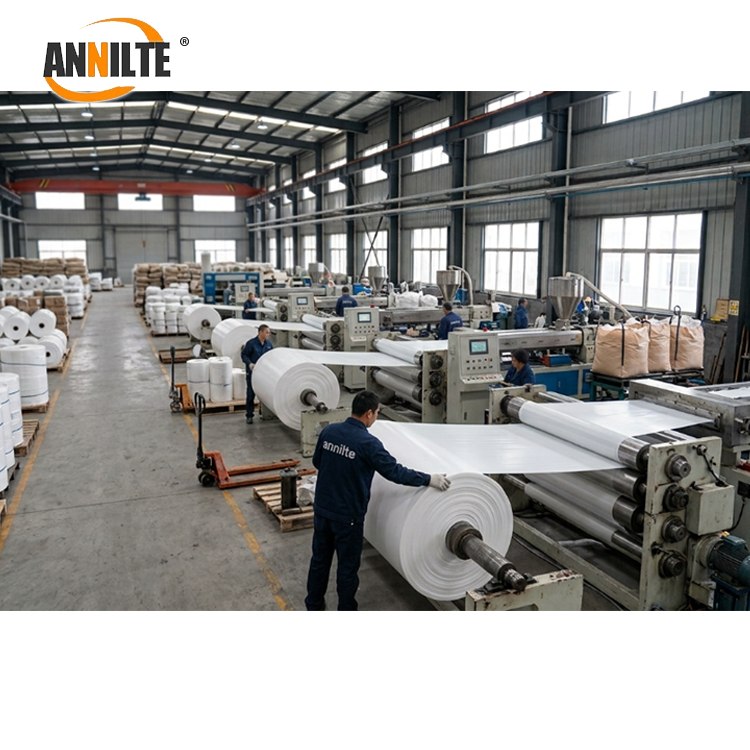
Annilte has 16 fully automated production lines imported from Germany in its integrated workshop, and 2 additional emergency backup production lines. The company ensures that the safety stock of all kinds of raw materials is not less than 400,000 square meters, and once the customer submits an emergency order, we will ship the product within 24 hours to respond to the customer's needs efficiently.
As a leading Chinese conveyor belt manufacturer with 17 years of industry experience, Annilte is proud to hold both ISO quality management certification and the RoHS environmental directive. Our manufacturing facilities meet “Green Factory” standards, and we are also an internationally recognized SGS Gold Supplier.
We offer a comprehensive range of customizable belt solutions under our own brand "ANNILTE", designed to meet diverse industrial needs.
Should you require further information about our products or capabilities, please do not hesitate to contact us.
WhatsApp: +86 185 6019 6101 Tel/WeChat: +86 185 6010 2292
E-mail: 391886440@qq.com Website: https://www.annilte.net/
Post time: Nov-17-2026