

Egg breakage and dirty eggs remain two of the most persistent profit leaks in commercial layer operations. A conventional solid egg belt often contributes to both problems: eggs collide during transport, and manure clings to the belt surface, requiring constant manual cleaning. A perforated egg collection belt changes this dynamic by seating each egg into a dedicated hole, separating eggs physically and allowing debris to fall away naturally.
This guide covers the specification variables that matter most when sourcing a PP egg conveyor belt for your layer cages or automated collection system, including material choice, hole geometry, width sizing, and certification requirements.
Why Perforated Design Outperforms Solid Belts
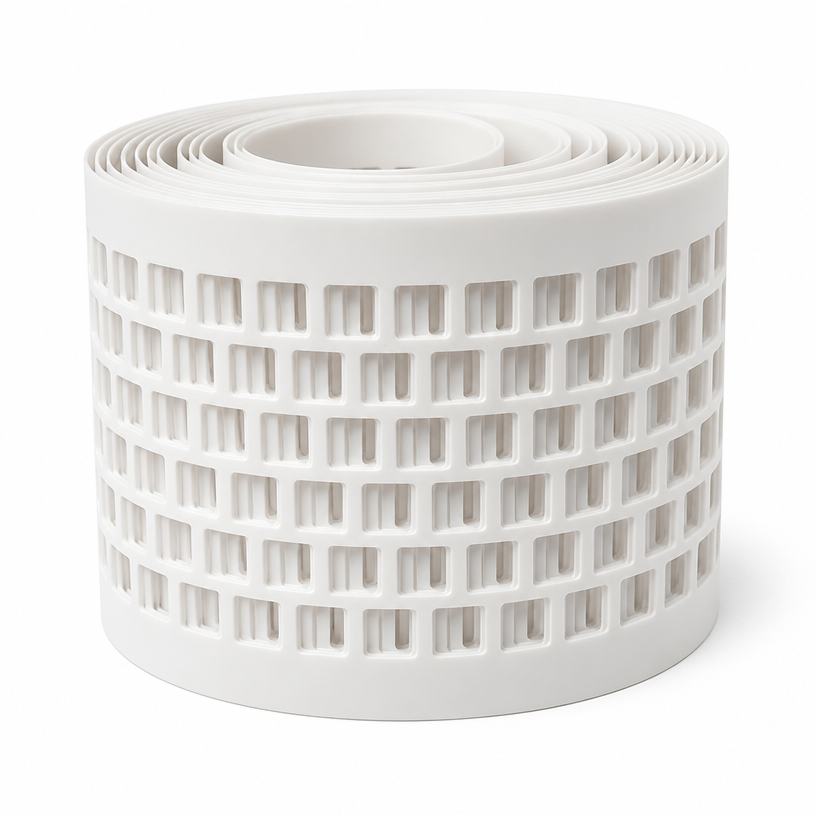
The functional difference is simple but consequential. On a solid belt, eggs roll and nudge against one another as the belt moves. On a perforated belt, each egg sits in a recessed hole, held in position and isolated from its neighbors. Annilte’s perforated egg picking belt is engineered around this principle, with round or square holes evenly distributed across the belt surface .
The operational results reported by farms using perforated belts are consistent:
- Breakage rate below 0.5% under normal operating conditions, compared with 5–8% common on poorly tensioned solid belts
- Self-cleaning effect: manure and feather debris drop through the perforations instead of accumulating on the belt surface
- Reduced bacterial load: PP material resists bacterial and fungal growth, which is particularly relevant for Salmonella control programs
For farms transitioning from manual or semi-automatic collection, the perforated belt is usually the single highest-impact component upgrade available.
PP vs. PVC: Material Choice Drives Long-Term Cost
The two materials commonly offered for egg belts are polypropylene (PP) and polyvinyl chloride (PVC). The upfront price difference can be tempting, but the total cost of ownership diverges sharply.
Performance Comparison
| Factor | PP Woven Belt | PVC Belt |
|---|---|---|
| Typical lifespan | 3–5+ years | 1–2 years |
| Cold resistance | Flexible to -30°C | Stiffens below 0°C |
| UV stability | Yes (with additives) | Degrades in sunlight |
| Cleaning chemicals | Resists oils & disinfectants | May swell or crack |
| Egg surface interaction | Woven texture cradles eggs | Smooth surface allows sliding |
| Breakage reduction (vs. baseline) | Up to 15% improvement | Minimal |
Source: industry comparison data
Annilte’s standard egg belts are woven from high-strength PP yarn with UV and anti-static treatment, a formulation developed over 15+ years of conveyor belt manufacturing . For European farms with unheated barns or wash-down systems, PP is the practical specification.
Selection Variables Buyers Overlook
Most procurement decisions focus on width and price. These four variables matter more.
1. Hole Diameter and Shape
The hole must hold the egg securely without gripping it so tightly that the shell cracks. For standard table eggs, a round hole of 40–45 mm is the common specification . Square and triangular hole options exist for specific cage geometries and egg sizes. If your flock produces unusually large or small eggs, hole diameter should be adjusted before ordering.
2. Width Sizing
Belt width must match your cage tier configuration and the number of egg rows converging onto the belt. Annilte manufactures perforated egg belts in widths from 50 mm to 700 mm, with 200 mm, 350 mm, and 500 mm being the most requested sizes for multi-tier layer systems . Widths beyond standard ranges are custom-produced.
3. Tensile Strength and Elongation
A belt that stretches under load will sag, misalign, and eventually derail. Annilte’s PP perforated belt achieves tensile strength above 300 N/mm² with low elongation characteristics . For long runs or multi-tier installations, specify the tensile grade explicitly rather than assuming all PP belts are equivalent.
4. Splice and Installation Method
Perforated belts can be joined by metal clips or vulcanized splicing. Vulcanized splices produce a smoother joint that reduces catching and egg disturbance at the connection point. Annilte supports both methods and can pre-fabricate belts to your required length to minimize on-site splicing.
Installation and Maintenance Practices That Extend Belt Life
Even a correctly specified belt will underperform if installation is rushed or maintenance is neglected.
Installation Essentials
Before mounting a new belt, clean the cage tracks thoroughly. Debris left on the track will cause snags and tracking problems immediately. Unroll the belt along the run without twisting, feed it through the drive and tensioner, and pull it taut to the far end. Tension should allow slight sag at the midpoint—too tight causes premature stretching, too loose causes egg accumulation and jams .
After installation, run the system empty first to check for rubbing or wandering, then run a short cycle with dummy eggs before introducing the production flock .
Maintenance Schedule
| Task | Frequency | Notes |
|---|---|---|
| Visual inspection for holes/tears | Weekly | Replace if hole deformation affects egg seating |
| Cold water rinse | As needed | Do not use hot water or chemicals on standard PP belts |
| Tension check | Monthly | Adjust if sag exceeds specification |
| Splice inspection | Monthly | Check clip wear or vulcanized joint integrity |
Annilte’s PP belts are designed for cold water cleaning only. Warm water and chemical cleaners can degrade the PP fibers and shorten belt life. This is a critical point for farms accustomed to wash-down protocols designed for other equipment types.

R&D Team
Annilte has a research and development team consisting of 35 technicians. With strong technical research and development capabilities, we have provided conveyor belt customization services for 1780 industry segments, and gained recognition and affirmation from 20,000+ customers. With mature R&D and customization experience, we can meet the customization needs of different scenarios in various industries.

Production Strength
Annilte has 16 fully automated production lines imported from Germany in its integrated workshop, and 2 additional emergency backup production lines. The company ensures that the safety stock of all kinds of raw materials is not less than 400,000 square meters, and once the customer submits an emergency order, we will ship the product within 24 hours to respond to the customer's needs efficiently.
As a leading Chinese conveyor belt manufacturer with 17 years of industry experience, Annilte is proud to hold both ISO quality management certification and the RoHS environmental directive. Our manufacturing facilities meet “Green Factory” standards, and we are also an internationally recognized SGS Gold Supplier.
We offer a comprehensive range of customizable belt solutions under our own brand "ANNILTE", designed to meet diverse industrial needs.
Should you require further information about our products or capabilities, please do not hesitate to contact us.
WhatsApp: +86 185 6019 6101 Tel/WeChat: +86 185 6010 2292
E-mail: 391886440@qq.com Website: https://www.annilte.net/
Post time: Nov-04-2026