

If you supply indoor sports venues in Europe, you’ve seen the claims. Every tug of war mat is “non-slip.” Every supplier says their surface “maximizes grip.” The word gets used so often it stops meaning anything.
Here’s the uncomfortable truth: a mat can feel grippy on day one and become a liability by month six. The difference isn’t in the marketing language. It’s in the rubber compound and what it’s designed to resist.
What Actually Destroys Grip Over Time
TWIF’s own documentation on indoor matting addresses this directly. The organization notes that rubber matting needs built-in resistance to ozone and ultraviolet light. Without special anti-ozonants, exposure to ground-level ozone and fluorescent gym lighting causes surface cracking and a measurable decrease in tensile strength. This degradation can begin within months .
For a venue supplier, that timeline matters. You sell a mat to a sports hall. Six months later, the surface has hardened, the grip has faded, and the client calls you—not the factory.
TWIF also states plainly that it has “never ever tested a sample of matting imported from Asia that is ozone and UV resistant” . That’s a blanket statement, and it’s the kind of claim that should make European buyers ask harder questions rather than walk away. The right question isn’t “where is it made?” It’s “show me the compound specification and the aging test data.”
The Real-World Consequence of Getting It Wrong
At a European championship, three of the five mats in use were not genuine Dunlomat. Competitors complained they were too slippery. The event could only continue using the two remaining mats that met the grip standard .
That scenario is the one venue suppliers should keep in mind. A mat that passes a visual inspection but fails under competition conditions doesn’t just embarrass the organizer. It traces back to whoever supplied it.
What Annilte Does Differently
Annilte has manufactured industrial conveyor belt rubber for 17 years. That material is engineered for abrasion, tearing, and environmental exposure—the same degradation mechanisms that kill grip on competition matting.
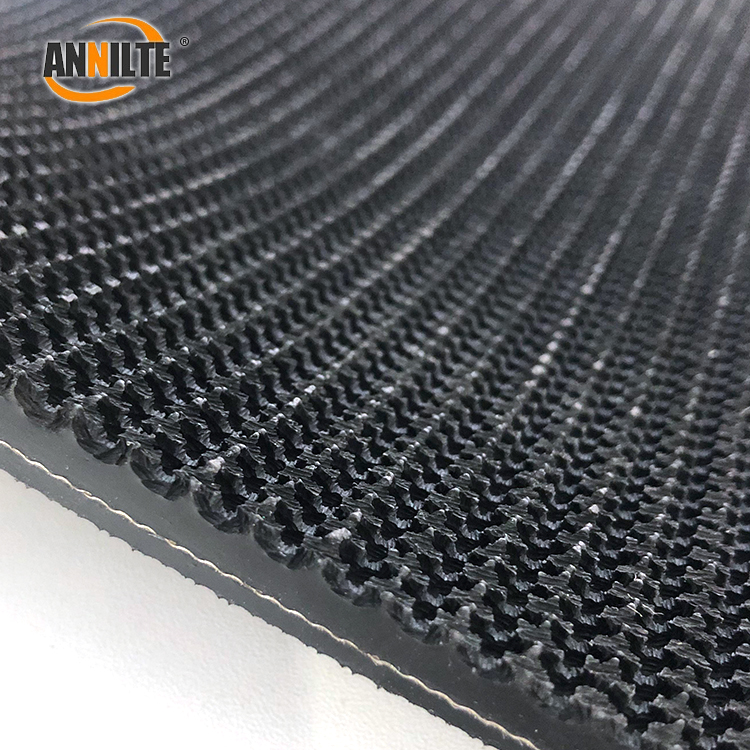
Our tug of war matting uses virgin rubber with a wear-resistant top layer, tested to maintain structural integrity through 5,000+ pulls. The surface holds a friction coefficient of ≥ 0.85 under dry conditions. Tear strength exceeds 150 kN/m (ISO 505), relevant when a single pull generates over 4,000 Newtons .
We don’t claim to be Dunlop. We’re a Chinese factory that makes industrial rubber, and we’ve applied that engineering to competition matting. What we offer is documented performance, direct pricing, and the ability to customize dimensions, thickness (4mm–10mm), and surface hardness (Shore A 65–75) without the lead times that come with European sourcing.
The Base Matters Too
A non-slip surface is only as stable as what’s underneath it. TWIF’s assembly guidance specifies a 18mm plywood base, cut slightly wider than the mat for secure fixing. The mat is bonded to the base with contact adhesive, and the plywood edges are covered with side strips to create a unified competition surface .
Annilte supplies mat and wooden base together. The mat underside is designed for bonding, and the platform is dimensioned to match. For venue suppliers, that means one order, one quality standard, and one supplier responsible for the complete system.
What European Buyers Should Ask
Before placing an order for non-slip tug of war matting, request:
- Friction coefficient data, not just the word “non-slip”
- Aging test information for ozone and UV exposure
- Tear strength figures (ISO 505 or equivalent)
- Whether the base platform is included or sourced separately
- Current certifications for the specific European market
Annilte provides this documentation on request. We’d rather answer technical questions upfront than handle a complaint after the first competition.

R&D Team
Annilte has a research and development team consisting of 35 technicians. With strong technical research and development capabilities, we have provided conveyor belt customization services for 1780 industry segments, and gained recognition and affirmation from 20,000+ customers. With mature R&D and customization experience, we can meet the customization needs of different scenarios in various industries.

Production Strength
Annilte has 16 fully automated production lines imported from Germany in its integrated workshop, and 2 additional emergency backup production lines. The company ensures that the safety stock of all kinds of raw materials is not less than 400,000 square meters, and once the customer submits an emergency order, we will ship the product within 24 hours to respond to the customer's needs efficiently.
As a leading Chinese conveyor belt manufacturer with 17 years of industry experience, Annilte is proud to hold both ISO quality management certification and the RoHS environmental directive. Our manufacturing facilities meet “Green Factory” standards, and we are also an internationally recognized SGS Gold Supplier.
We offer a comprehensive range of customizable belt solutions under our own brand "ANNILTE", designed to meet diverse industrial needs.
Should you require further information about our products or capabilities, please do not hesitate to contact us.
WhatsApp: +86 185 6019 6101 Tel/WeChat: +86 185 6010 2292
E-mail: 391886440@qq.com Website: https://www.annilte.net/
Post time: Oct-23-2026