

Replacing an egg belt on an H-type layer cage is not a generic maintenance task. The H-frame's vertical tier stack means each tier belt runs a short, high-cycle loop under constant tension. A belt that is dimensionally correct but spliced poorly will fail at the joint before the PP body shows any wear.
Three specifications decide whether the new belt runs clean or becomes a recurring problem:
- The 95–120 mm width window that fits mainstream H-cage egg channels
- The splice method that must match your drive pulley clearance
- The tension setting that keeps the belt tracking without overloading the drive motor
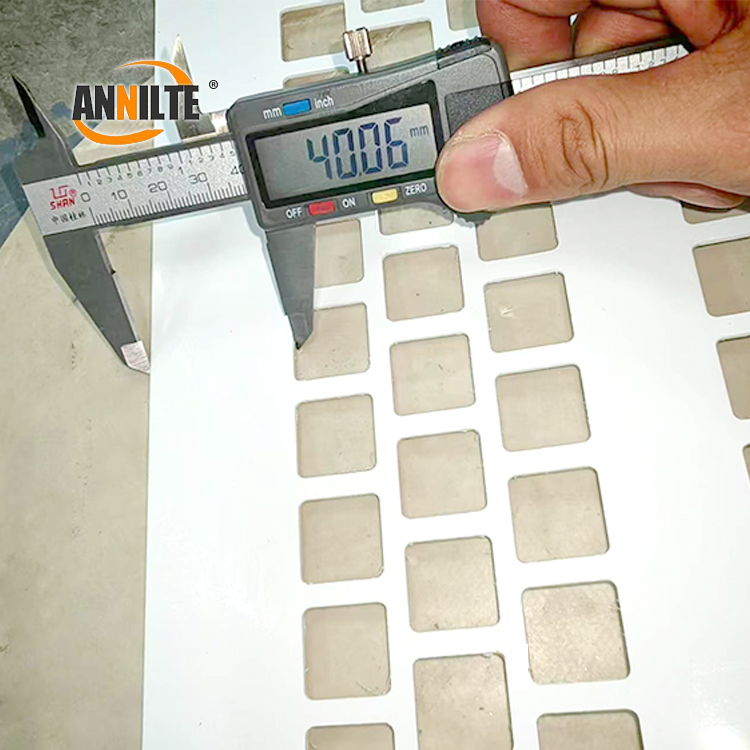
1. Confirm the 95–120 mm Width Window Against Your H-Cage Channel
H-type cage egg collection channels almost universally accept a belt in the 95–120 mm range. 100 mm is the most common nominal width for tier belts. Ordering outside this window without measuring the actual channel is the most avoidable replacement error.
How the tier works: each tier belt is relatively short compared to a barn-length nest belt. The egg rolls from the cage floor onto a narrow belt that runs the row, then transfers to a cross-conveyor. The channel that guides the belt is typically stamped or formed to a fixed width.
- 100 mm belt in a 100 mm channel → tracks correctly
- 95 mm belt → may wander laterally under uneven tension
- 110 mm belt → may rub the channel sidewall, fraying the edge within weeks
Annilte's standard PP egg belt for cage systems is listed at 95 mm or 100 mm width, thickness around 1.2 mm. Oppermann's egg belt range covers 95 mm, 100 mm, 110 mm, and 120 mm to fit different equipment grooves.
Before ordering:
- Measure the old belt's width at three points with a caliper.
- Measure the channel's internal width with the belt removed.
- If the old belt has frayed edges, the measured width will be undersized—use the channel dimension as the primary reference.
Take-away tool: Record channel width, not old belt width. If the channel measures 102 mm, specify a 100 mm belt and verify edge clearance is at least 1 mm per side. A belt that fills the channel completely will bind on the return run.
2. Match the Splice Method to Your H-Cage Drive Clearance
For H-type cage tier belts, an ultrasonic welded finger splice is the preferred joint. It maintains the belt's thickness profile through the drive and guide rollers. Sewn or lapped splices create a bump that transfers vibration to every egg crossing the joint. On short H-tier loops the splice passes the drive pulley frequently, amplifying the damage.
The specific challenge: a tier belt loop is short, so the splice cycles past the drive and idler pulleys many times per hour. A joint 0.2 mm thicker than the belt body causes a visible jolt at each pass.
- Welding → best joining method for PP belts, seamless and hygienic joint
- Sewing → alternative, requires parallelogram stitch pattern and durable coarse thread; poorly sewn joints can fail at needle holes under tension
Annilte's egg collection belts are suitable for various joining methods and designed for easy maintenance and replacement. Ask your supplier before ordering:
- Does the replacement belt come with a splice kit or pre-spliced to length?
- If splicing on-site, does your maintenance team have an ultrasonic welding unit rated for PP?
- Or can the supplier ship a belt with a factory-prepared finger pattern that aligns perforations across the joint?
Verification step: after splicing, run the belt 10–15 minutes and watch the splice as it passes the drive pulley. Any visible lift or bump means the joint needs rework before production eggs are placed on the belt.
3. Set Tension by Tracking Behavior, Not by "Snug" Feel
Tension an H-type cage egg belt until it tracks centered on the pulleys without slipping under load, and no further. Over-tensioning is more common than under-tensioning on H-cage retrofits because maintenance teams compensate for worn drive pulleys by tightening the belt.
Replacement sequence:
- Loosen the tensioning bolts at the drive unit.
- Remove the old belt.
- Feed the new belt through the tier, ensuring it is not twisted.
- Splice the ends.
- Re-tension.
The critical step is the final tension adjustment:
- Too loose → slips on the drive pulley, jerky movement that cracks eggs
- Too tight → loads the drive motor, accelerates edge fraying where the belt contacts the guide
Field guidance identifies uneven tension and misaligned frame sections as the primary causes of lateral belt movement. Before blaming the belt, verify the H-frame tier is level and the drive and idler pulleys are aligned. If the belt tracks to one side consistently, the tensioner on that side is likely tighter than the opposite side.
Practical threshold: after tensioning, run the belt empty 10–15 minutes. The belt should stay within ±10 mm of center on the pulleys. If it drifts beyond this, stop and check pulley alignment rather than adding more tension.
4. What to Record Before the Old Belt Leaves the Tier
The most useful specification document for your next replacement is the one you create during this replacement. H-cage egg belts typically deliver 5–8 years of service with virgin PP construction. The variables that shorten that life—UV exposure, cleaning chemical concentration, drive alignment—are farm-specific.
Record four data points before removing the old belt:
- Measured width at three points on the old belt, plus the channel internal width.
- Splice type and condition: welded, sewn, or lapped. Note cracking or separation.
- Edge condition at drive-end and return-end sections: fraying, glazing, or cracking. Wear concentrated at one location points to a pulley alignment issue, not a belt material problem.
- Tensioner position before loosening: count exposed threads or mark the bolt position. This is a baseline for the new belt, though the new belt may need a different setting.
Keep this record with the tier number and installation date. When the next replacement window approaches, you will have a farm-specific wear profile rather than a generic service-life estimate.
FAQ
Can I use a 125 mm belt on an H-type tier if the channel allows it?
Only if the channel and guide rollers are designed for it. Wider belts carry more eggs per meter but increase drive load and may interfere with the egg transfer point at the row end. Confirm with the cage manufacturer's tier drawing before upsizing.
How long should an H-type cage egg belt last?
Virgin PP egg belts in cage service are commonly rated for 5–8 years, with some manufacturers claiming up to 8–10 years under favorable conditions. Actual life depends on cleaning chemical exposure, UV load at the tier position, and drive alignment. A belt that fails at the splice within 2 years points to a joint or tension issue, not normal wear.
What causes a new belt to track off-center immediately after installation?
Three causes, in order of likelihood:
- Uneven tensioner adjustment left-to-right
- A twisted belt at the splice
- A misaligned drive pulley
Re-check splice alignment first—a finger splice offset by even one hole will pull the belt to one side with every revolution.
Inquiry Guidance
If you are replacing H-type cage tier belts and need a specification match, send the measured channel width, old belt thickness, tier length, and splice preference to the Annilte technical team. We will confirm the correct width and thickness from our PP egg belt range and advise on splice preparation before shipment.

R&D Team
Annilte has a research and development team consisting of 35 technicians. With strong technical research and development capabilities, we have provided conveyor belt customization services for 1780 industry segments, and gained recognition and affirmation from 20,000+ customers. With mature R&D and customization experience, we can meet the customization needs of different scenarios in various industries.

Production Strength
Annilte has 16 fully automated production lines imported from Germany in its integrated workshop, and 2 additional emergency backup production lines. The company ensures that the safety stock of all kinds of raw materials is not less than 400,000 square meters, and once the customer submits an emergency order, we will ship the product within 24 hours to respond to the customer's needs efficiently.
As a leading Chinese conveyor belt manufacturer with 17 years of industry experience, Annilte is proud to hold both ISO quality management certification and the RoHS environmental directive. Our manufacturing facilities meet “Green Factory” standards, and we are also an internationally recognized SGS Gold Supplier.
We offer a comprehensive range of customizable belt solutions under our own brand "ANNILTE", designed to meet diverse industrial needs.
Should you require further information about our products or capabilities, please do not hesitate to contact us.
WhatsApp: +86 185 6019 6101 Tel/WeChat: +86 185 6010 2292
E-mail: 391886440@qq.com Website: https://www.annilte.net/
Post time: Nov-27-2026