

The edge of a polyester mesh belt is the part nobody inspects until a loose strand turns up in product. In Australia, that discovery triggers a different conversation than in most markets — not just a supplier complaint, but a question about whether your food contact surface meets FSANZ requirements.
This guide covers what edge sealing actually does, the two materials that dominate food-grade belts, and the specific checks worth running before you approve a purchase order.
Why the Edge Is the Weak Point
A woven polyester mesh belt is cut to width from a wider loom. The cut edge exposes individual monofilament yarns. On a wet processing line, those yarns work against the conveyor frame, guide rollers and scrapers. Without sealing, they fray. Once frayed, they shed.
Unsealed edges also create a capillary effect. Dirty wash water can wick into the belt structure through the open edge and sit there. Standard washdown doesn’t flush it out. Over time, that becomes a harborage point your sanitation team can’t see or reach.
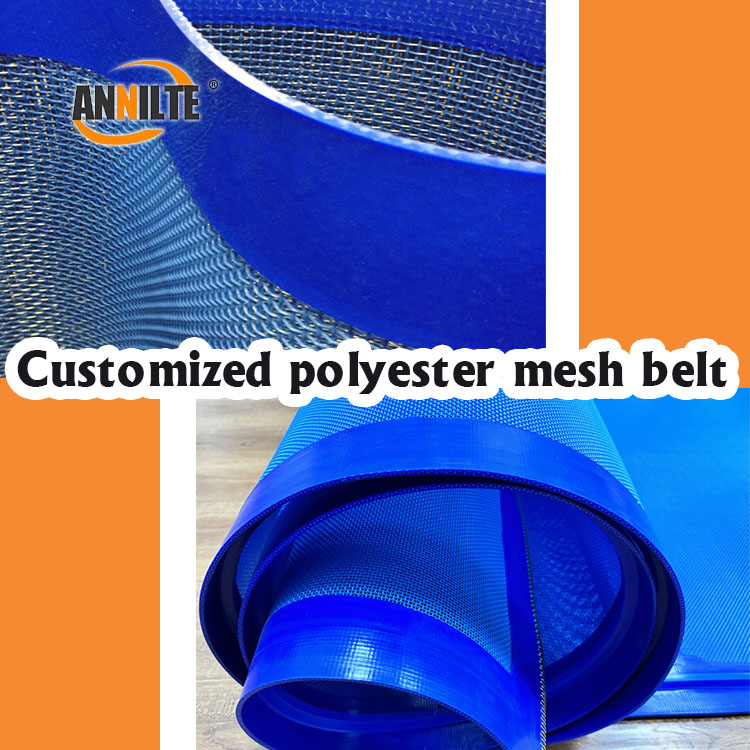
Sealing encapsulates the cut edge in a continuous polymer layer. Done correctly, it eliminates fiber shedding and closes the capillary path.
TPU vs PVC: The Choice That Affects Compliance
Two materials dominate food-grade edge sealing: TPU (polyurethane) and PVC (polyvinyl chloride). They are not interchangeable.
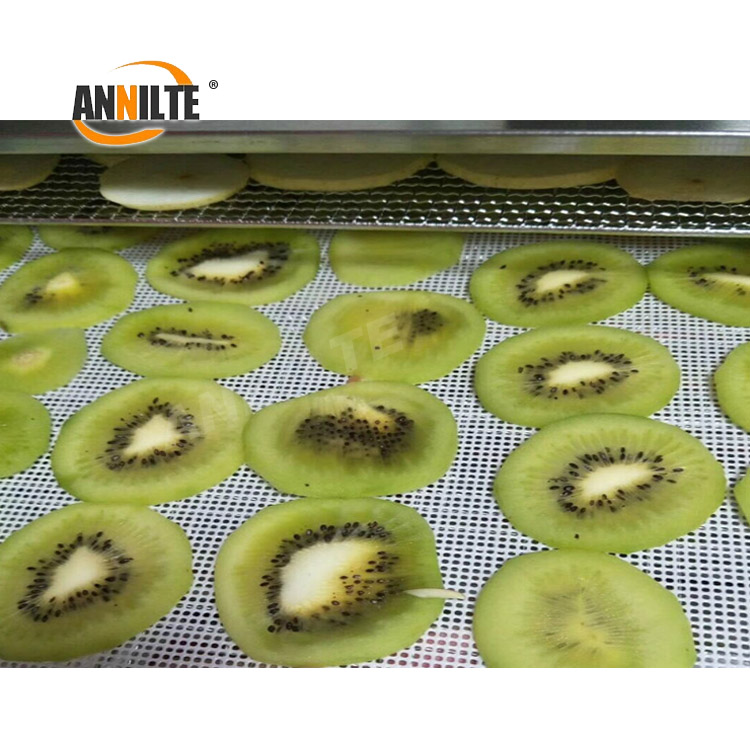
TPU edges are the safer specification for direct food contact. TPU is flexible through repeated wash and CIP cycles, resistant to hydrolysis, and available with documentation for FDA 21 CFR and EU EC 1935/2004 compliance . For fruit, vegetable and ready-to-eat lines, this is the default recommendation.
PVC edges are cost-effective and resist oils and greases well. They suit standard conveying and washing where direct food contact documentation is less critical, or where the belt runs on non-food sections of the line . PVC is more rigid. On small pulley diameters, that rigidity can crack over time.
What to ask: “Is the edge material TPU or PVC? Can you provide the migration test report for the edge polymer?” A supplier selling TPU edges for food contact will have the report ready. If the answer is “the edge is food grade” without a material name, push back.
The Australian Compliance Layer: FSANZ, Not Just FDA
Australian food processors operate under FSANZ Standard 3.2.2 and 3.2.3. The standards require food contact surfaces to be smooth, non-absorbent, non-toxic, and capable of being effectively cleaned .
For a mesh belt edge, this translates to three practical checks:
Smoothness: A heat-sealed TPU edge should be continuous, with no exposed yarn ends at the join. Run your hand along the edge. If you can feel individual fibers, the seal is incomplete.
Non-absorbency: The edge should not take on water. A sealed edge that swells or softens after a wash cycle is not doing its job.
Cleanability: The edge-to-mesh transition should be flush. A step or gap between the sealed edge and the woven body traps product and defeats the purpose of sealing it in the first place.
Australian regulators inspect food contact surface condition during routine premises audits. A frayed or degraded belt edge is a visible, documentable non-compliance .
A 3-Minute Edge Check You Can Run on Delivery
Before accepting a belt shipment, run this check on a 1-meter section:
| Step | Action | Pass criteria |
|---|---|---|
| 1 | Visual inspect the full edge length | No exposed yarn ends, no gaps in the seal |
| 2 | Run a gloved finger along the edge | Smooth, no fiber snagging |
| 3 | Bend the edge back 90° at three points | No cracking, no separation from mesh |
| 4 | Wet a cloth and rub the edge firmly | No color transfer, no softening |
| 5 | Check the join (if endless) | Sealed edge continues through the join |
If any step fails, reject the section. A belt that fails step 1 or 3 will shed fibers on the line.
What Edge Sealing Doesn’t Fix
Edge sealing addresses fiber shedding at the cut edge. It does not address:
- Mesh body damage: A puncture or abrasion mark in the woven area can still release fibers.
- Joint integrity: If the belt has a mechanical joint, the joint area is a separate inspection point.
- Chemical incompatibility: If your CIP chemistry degrades the edge polymer over time, sealing buys you months, not years. Confirm the edge material’s chemical resistance against your actual cleaning agents before the first order.
The Supplier Question That Reveals Manufacturing Depth
Ask: “Is the edge sealed in-house, or is the belt purchased pre-edged?”
A manufacturer who seals edges in-house controls the temperature, pressure and cooling cycle. They can adjust the seal for your specific mesh type and width. A reseller buying pre-edged belt has no visibility into that process and no ability to troubleshoot if the seal fails.
Annilte seals belt edges as part of its production process, with TPU and PVC options available depending on the application and compliance requirement. If you’re specifying a food-grade mesh belt for an Australian line, send us the belt width, mesh opening, and your cleaning chemistry. We’ll confirm the appropriate edge specification and provide the material documentation your audit requires.
Related pages: Polyester Mesh Conveyor Belt Specification Guide · Food Grade Polyester Mesh Belt for Fruit Processing

R&D Team
Annilte has a research and development team consisting of 35 technicians. With strong technical research and development capabilities, we have provided conveyor belt customization services for 1780 industry segments, and gained recognition and affirmation from 20,000+ customers. With mature R&D and customization experience, we can meet the customization needs of different scenarios in various industries.

Production Strength
Annilte has 16 fully automated production lines imported from Germany in its integrated workshop, and 2 additional emergency backup production lines. The company ensures that the safety stock of all kinds of raw materials is not less than 400,000 square meters, and once the customer submits an emergency order, we will ship the product within 24 hours to respond to the customer's needs efficiently.
As a leading Chinese conveyor belt manufacturer with 17 years of industry experience, Annilte is proud to hold both ISO quality management certification and the RoHS environmental directive. Our manufacturing facilities meet “Green Factory” standards, and we are also an internationally recognized SGS Gold Supplier.
We offer a comprehensive range of customizable belt solutions under our own brand "ANNILTE", designed to meet diverse industrial needs.
Should you require further information about our products or capabilities, please do not hesitate to contact us.
WhatsApp: +86 185 6019 6101 Tel/WeChat: +86 185 6010 2292
E-mail: 391886440@qq.com Website: https://www.annilte.net/
Post time: Nov-27-2026