

For grain processors, millers, and bulk handling facilities across the UAE, the bucket elevator belt is the lifeline of vertical conveying. A single belt failure during peak harvest season or continuous milling operations can halt production, damage valuable grain, and incur substantial downtime costs. Yet many buyers in the region still rely on generic specifications that overlook the unique demands of grain transport and the harsh Gulf environment.
This guide addresses the critical gaps left by most supplier content: how to select the right belt for grain, how to install and maintain it for maximum lifespan, and why SGS and RoHS certifications matter for your procurement decisions. Whether you operate a flour mill in Dubai, a feed plant in Abu Dhabi, or a grain silo facility in Sharjah, the insights below will help you specify a belt that performs reliably year after year.
Why Grain Handling Demands a Specialized Bucket Elevator Belt
Grain is not a uniform, forgiving material. Rice, wheat, corn, and barley each present distinct challenges: fragility that leads to cracking and dust generation, abrasiveness that slowly wears belt covers, and the constant risk of spillage that erodes profitability. A belt that performs adequately in a sand or cement application may fail quickly in a grain elevator due to inadequate food-grade properties, poor tracking characteristics, or insufficient resistance to oil and moisture.
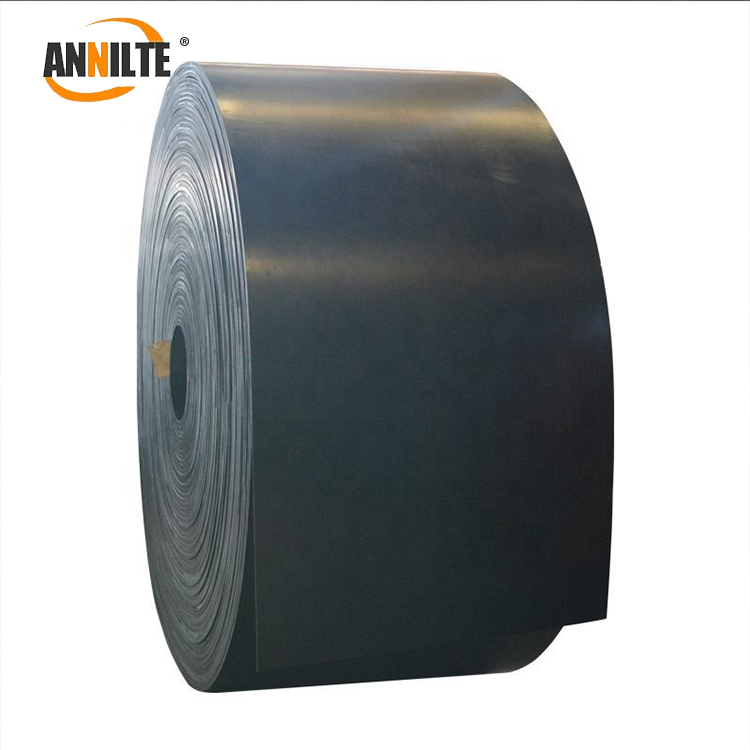
Annilte manufactures bucket elevator belts specifically engineered for agricultural and food-grade applications. Our belts utilize high-tensile EP (polyester-nylon) fabric carcasses that resist stretching under continuous load, paired with food-grade rubber covers that are safe for direct contact with consumables. For UAE grain handlers, this combination delivers the dimensional stability needed for precise bucket alignment and the material safety required by increasingly stringent import and food safety regulations.
Key Selection Criteria for UAE Grain Operations
Temperature and Material Characteristics
Belt bucket elevators are the cost-effective choice for grain applications where material temperatures remain below approximately 130°C. Grain typically falls well within this range. However, UAE ambient temperatures can exceed 45°C in summer, and enclosed elevator casings may run even hotter. This makes the heat aging resistance of the belt cover compound a critical specification. Annilte’s rubber compounds are formulated to resist hardening and cracking under sustained elevated temperatures, preserving flexibility and tracking performance.
Belt Construction: EP vs. Steel Cord
For most grain elevator applications with centre distances under 150 meters, EP fabric belts offer the optimal balance of strength, flexibility, and cost. Steel cord belts become advantageous for extremely high capacities or very long centre distances, but their rigidity demands perfectly cylindrical pulleys and offers less tolerance for minor misalignment. The table below summarizes the key differences for grain handling.
| Parameter | EP Fabric Belt (Recommended for Grain) | Steel Cord Belt |
|---|---|---|
| Typical centre distance | Up to ~150 m | 150 m+ |
| Elastic elongation | Moderate | Very low |
| Tracking tolerance | Good; tolerates slight crown | Requires flat pulleys |
| Bucket bolt holding | Excellent with fabric weave | Excellent with dense weft |
| Food-grade options | Widely available | Limited |
| Relative cost | Lower | Higher |
Certification Requirements: SGS and RoHS
For UAE buyers, supplier certifications are not merely formalities. SGS certification provides independent verification that the belt meets specified mechanical and physical properties, reducing the risk of premature failure. RoHS compliance confirms the absence of restricted hazardous substances, which is increasingly requested by food safety auditors and corporate procurement policies. When sourcing from international suppliers, always request current SGS test reports and RoHS declarations specific to the belt compound and construction you are ordering.
Installation Best Practices for Long Belt Life
Proper installation prevents the majority of premature belt failures. The following steps are critical for grain elevator belts.
Pre-installation inspection. Verify that the belt is free of transit damage and that the splice (if pre-spliced) is square and secure. Check pulley alignment and confirm that the boot and head pulleys are parallel.
Controlled tensioning. During initial operation, the belt will stretch as the fabric carcass settles under load. Run the elevator at partial load for several hours, then re-check tension. The belt must run centred on both pulleys without slipping. Over-tensioning accelerates splice fatigue and bearing wear; under-tensioning causes slippage and bucket bolt loosening.
Bucket bolt verification. After the first 20–30 hours of operation, re-torque all bucket bolts to the manufacturer’s specification. Vibration during initial running can loosen bolts that were correctly tightened at installation. This simple step prevents bucket loss and belt damage.
Tracking adjustment. Grain elevator belts should track centrally. If the belt drifts, check pulley crown (for EP belts), belt splice squareness, and material buildup on pulleys. Do not attempt to correct tracking by over-tensioning one side.
Maintenance Schedule for UAE Conditions
The UAE’s dust, heat, and humidity demand a maintenance regime more frequent than standard manufacturer recommendations for temperate climates.
Weekly: Inspect belt tracking and listen for unusual noises. Check for grain accumulation in the boot section, which can cause belt abrasion and misalignment.
Monthly: Verify belt tension and adjust via the take-up system if slippage is observed. Inspect the belt surface for cover wear, cracks, or exposed fabric. Tighten any loose bucket bolts. Check the head pulley lagging for wear; replace when worn to 50% of original thickness.
Quarterly: Inspect the splice thoroughly for separation or edge damage. Review the belt’s elongation history; if the take-up system is near its limit, the belt may require re-splicing (shortening) to restore proper tension.
Annually: Conduct a full inspection of the elevator casing for corrosion (particularly relevant in coastal UAE facilities) and verify that ventilation is adequate to prevent heat buildup around the belt.
Frequently Asked Questions
Q1: Can Annilte supply food-grade certified bucket elevator belts for grain contact?
Yes. Our grain-specific belts use food-grade rubber covers formulated for direct contact with consumables. We can provide SGS test reports and material safety documentation upon request to support your food safety compliance.
Q2: What is the typical lead time for delivery to the UAE?
Standard specifications ship within 7–15 days from order confirmation. Custom widths or splice configurations may require additional time. We coordinate with freight forwarders experienced in UAE port clearance.
Q3: How do I determine the correct belt width and ply count for my elevator?
Belt width is determined by your required capacity (tonnes per hour), bucket size, and material density. Ply count depends on the centre distance and head pulley diameter. Our technical team can calculate the optimal specification if you provide your elevator capacity, centre distance, and bucket dimensions.
Q4: What causes belt edge wear in grain elevators, and how can it be prevented?
Edge wear typically results from belt misalignment, material buildup on pulleys, or poorly aligned casings. Regular tracking checks and boot cleanliness are the primary preventatives. If wear is already present, inspect the belt edges during monthly maintenance and plan replacement before fabric becomes exposed.

R&D Team
Annilte has a research and development team consisting of 35 technicians. With strong technical research and development capabilities, we have provided conveyor belt customization services for 1780 industry segments, and gained recognition and affirmation from 20,000+ customers. With mature R&D and customization experience, we can meet the customization needs of different scenarios in various industries.

Production Strength
Annilte has 16 fully automated production lines imported from Germany in its integrated workshop, and 2 additional emergency backup production lines. The company ensures that the safety stock of all kinds of raw materials is not less than 400,000 square meters, and once the customer submits an emergency order, we will ship the product within 24 hours to respond to the customer's needs efficiently.
As a leading Chinese conveyor belt manufacturer with 17 years of industry experience, Annilte is proud to hold both ISO quality management certification and the RoHS environmental directive. Our manufacturing facilities meet “Green Factory” standards, and we are also an internationally recognized SGS Gold Supplier.
We offer a comprehensive range of customizable belt solutions under our own brand "ANNILTE", designed to meet diverse industrial needs.
Should you require further information about our products or capabilities, please do not hesitate to contact us.
WhatsApp: +86 185 6019 6101 Tel/WeChat: +86 185 6010 2292
E-mail: 391886440@qq.com Website: https://www.annilte.net/
Post time: Nov-10-2026